Most decorators running DTF already understand the economics. No minimums, no setup fees, full-color complexity on any design, fast turnaround. It is a production model built for the way buyers actually order today.
But there is an entire category of decoration work that standard DTF cannot serve — and that UV DTF handles with the same no-minimum, no-setup-fee simplicity that made DTF so compelling in the first place.
Glass tumblers. Ceramic mugs. Metal water bottles. Phone cases. Coolers. Rock glasses. These are surfaces that heat-applied transfers cannot bond to without a polyester coating. UV DTF stickers apply directly to virtually any smooth hard surface — no heat press, no coating requirement, no minimum order.
Most DTF decorators are already serving the apparel market. UV DTF is the same customer — asking for the same logo — on a different surface. The window to be the first shop in your market to say yes to that request is still open.
DTF versus UV DTF — understanding the difference
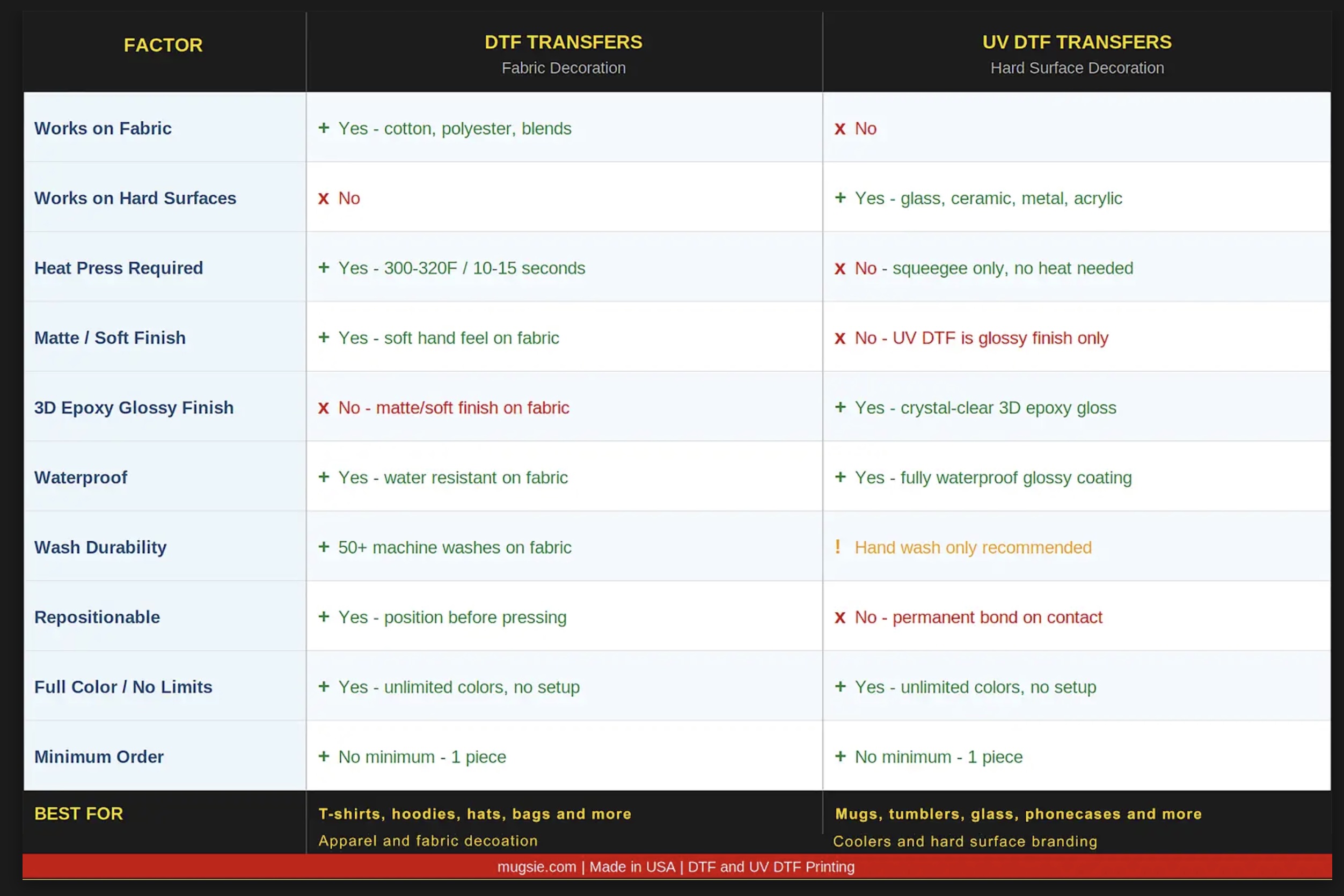
The distinction between standard DTF and UV DTF is fundamental, not incremental. Standard DTF is a fabric decoration method. UV DTF is a hard surface decoration method. They serve different substrates, require different application processes and reach different end markets — which is precisely why adding UV DTF expands revenue rather than cannibalizing it.
The revenue opportunity most decorators are missing
Consider the orders that walk into a typical DTF shop and get turned away. A cafe wants their logo on 50 coffee mugs. A real estate agency wants branded tumblers for a client event. A bar wants custom rock glasses for a private party. A startup wants their logo on 30 phone cases for a product launch.
Every one of those is a UV DTF job. And every one of those clients — once they find a decorator who can say yes — tends to become a repeat customer ordering across multiple product types.
The hard surface branded merchandise market is growing faster than apparel decoration. Decorators who add UV DTF to their service offering are not competing harder in a crowded apparel market — they are entering a category where the competition is significantly thinner.
The question is not whether your clients want hard surface decoration. They do. The question is whether they are ordering it from you — or from someone else.
Adding UV DTF to an existing DTF operation
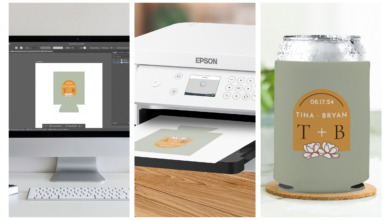
For a shop already running DTF, adding UV DTF as a service does not require significant capital investment in equipment. UV DTF transfers can be sourced from a specialist supplier and applied in-house using only a squeegee — no heat press required.
The shop that can deliver branded T-shirts and branded drinkware from a single supplier is significantly more valuable to a corporate buyer than the one that can only do one or the other. That is the commercial case for adding UV DTF — and the window to be first in your market is still open.
DTF opened the apparel decoration market to low minimums and fast turnarounds. UV DTF does the same thing for every hard surface your clients want branded.