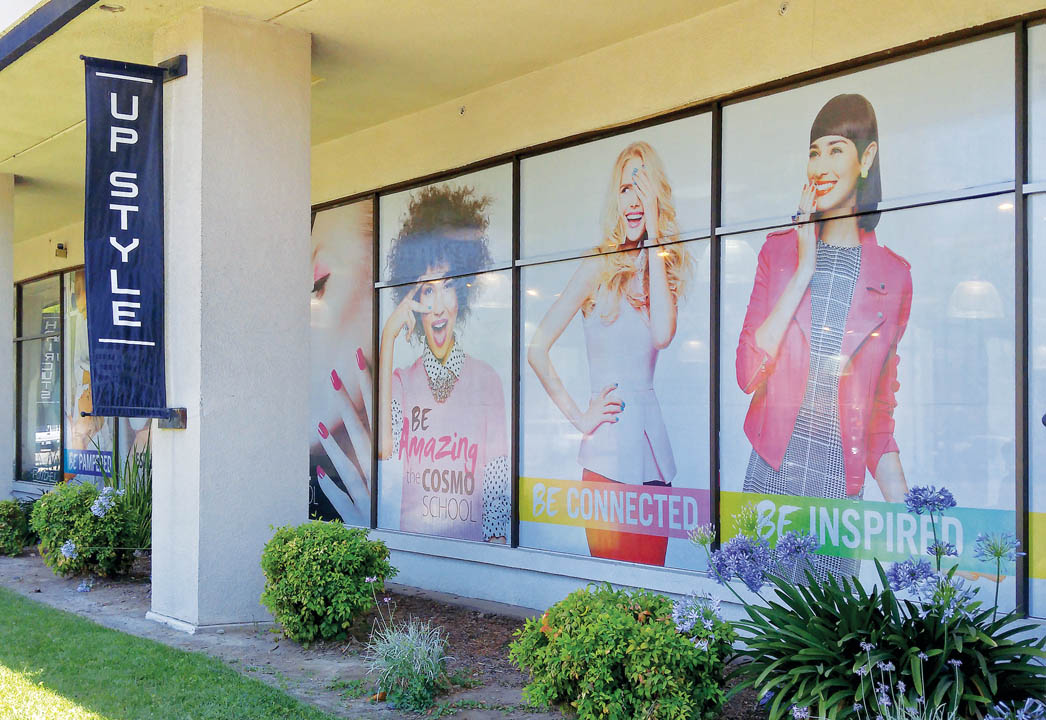
If you’re already wrapping vehicles, then your shop has the skills and tools necessary to also offer wraps on windows, walls, and even floors. We’ve noticed an increased interest in wall and window wraps over the years, and I’ll focus on these two areas.
Offering wraps on these unique surfaces allows you to expand your current services without adding in new skills or tools that you don’t already use. Expanding into environmental graphics is also a great way to become a full-service provider and to increase sales.
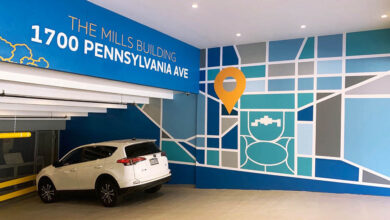
Wraps can also turn interior spaces into branding that flows across walls and windows seamlessly. Visual branding affects how people perceive a space in offices, lobbies, healthcare facilities, educational institutions, and retail spaces.
Existing skills
Successful sign shops and vehicle wrap companies know that good design fundamentals are as important as the proper tools and materials. Solid branding strategies, large-format layouts, understanding scale, and effective visual flow are design elements used in vehicle wraps and fleet graphics. Having these skills means you can expand into walls, windows, and floors with ease.
If you print in-house, then you already have the printer, laminator, tables, and other equipment necessary for these added services. Even if you design, scale, and install graphics, but outsource the printing, you still possess the skills to expand into these areas. Be sure to keep a close eye on color consistency and brand management since outsourced printing means you have less control.
The installation techniques used for vehicle wraps are much the same as with walls and windows. Surface prep, squeegee techniques, heat, and trimming skills overlap from vehicles
to walls and windows.
Considerations
In some ways, vehicle wraps are trickier because of the compound curves, concave areas, and obstacles. But, applying wraps to windows and walls can be trickier because of the height/scale of the wrap, surface textures, or obstacles, and on-site installation versus in-shop installs.
As with any service, once you increase your hands-on experience, the skills fall into place. When we install a vehicle wrap, we have steps in place to prep the vehicle, remove obstacles, apply the graphics to the contours of the vehicle, and properly trim and finish the wrap for quality and durability.
When we wrap windows and walls, we have a similar checklist of steps that we follow. The surface, contours, and application may be different, but material handling itself is the same. Knowing how to prep your substrate— whether it’s a vehicle, a wall, or a window—and then how to apply the graphics, are overlapping skills.
Windows
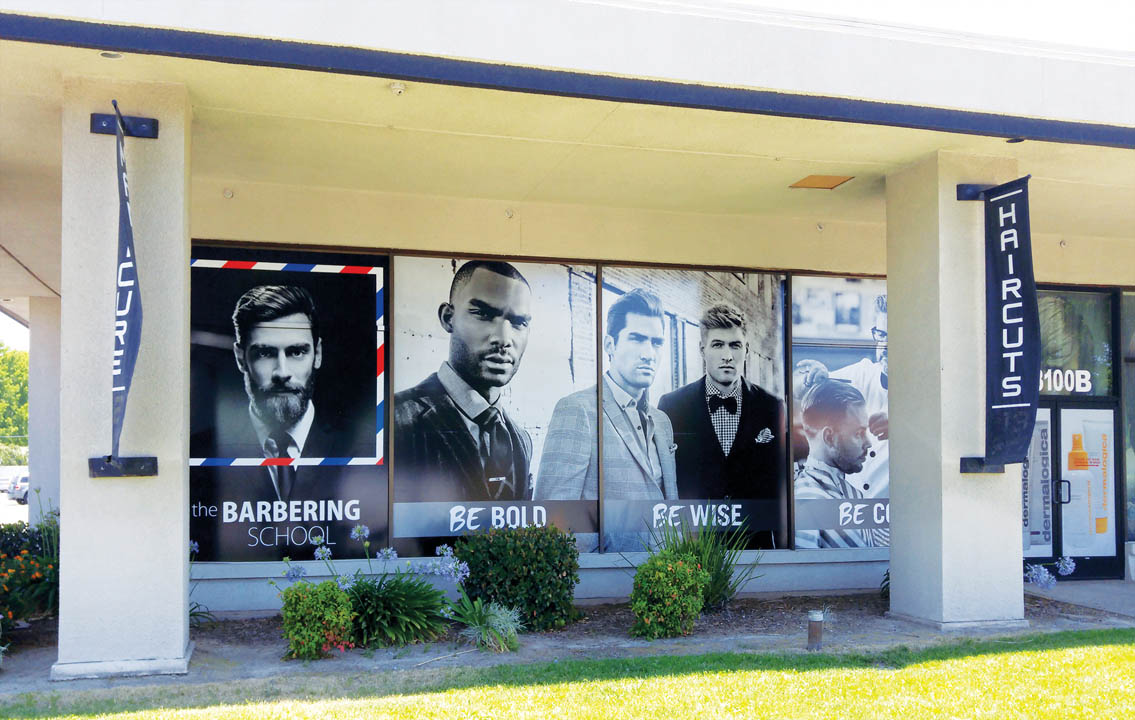
Wraps on large windows are an excellent opportunity for a customer to expand their advertising and branding. Logos, stripes across windows, and bullet lists of services were popular window graphics when we first started our business. Over the years, we’ve expanded into larger spot logos and full-color graphics, and then full window wraps as material options improved.
Beyond advertising, window wraps are also great for providing security and privacy. Frosted and etched films are a popular request for office areas that want a clean, professional look without blocking light flow, but also want to create privacy between spaces. You can apply these materials solid or with cutout logos and designs.
Window media
Perforated graphics are a popular choice that provides full coverage from the outside of the glass while still allowing visibility from the inside. We always laminate our perforated vinyl for added protection against UV rays and abrasion. It also keeps dust and water from settling in the holes, which affects the appearance and visibility.
For windows that don’t require visibility, there are solid vinyl options for partial to complete coverage. This is a good option if a client wants to block visibility into a space from the outside and doesn’t require visibility out from the inside. In these cases, we will use a solid vinyl material that is applied from the outside.
If the client desires complete coverage while still wanting an image visible from both sides, then double-sided window graphics are a great option. With clear adhesive on one side, the advertising can be the same or different on each side.
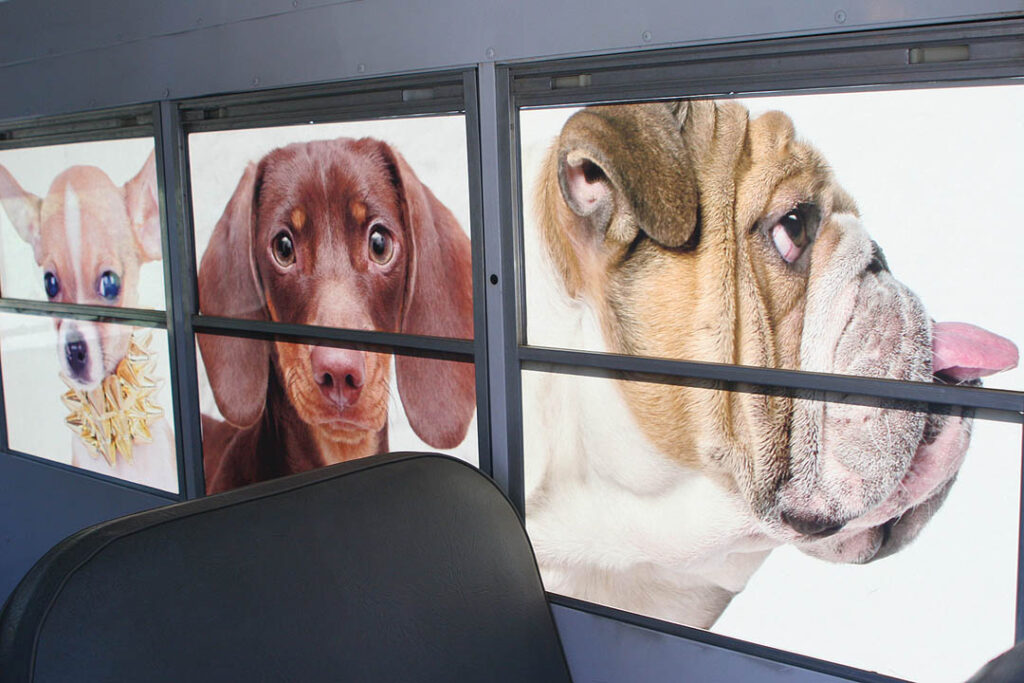
Full-color premium vinyl graphics, the same material we wrap with, also work great for full window coverage while still allowing light and the image through. For example, we wrapped a pet rescue shuttle bus and extended the image of dogs onto the windows, as if they were riding the bus. From the outside, the white point of the vinyl and colors matched the rest of the wrap. From the inside, you could see the image of the dogs, and light still came in, so the interior was not dark.
Transit media or a calendared vinyl with a removable adhesive are great for temporary window graphics. We wrapped the storefront of a new fitness center that wanted to advertise that they were opening soon, while also blocking visibility into the building during construction.
Walls
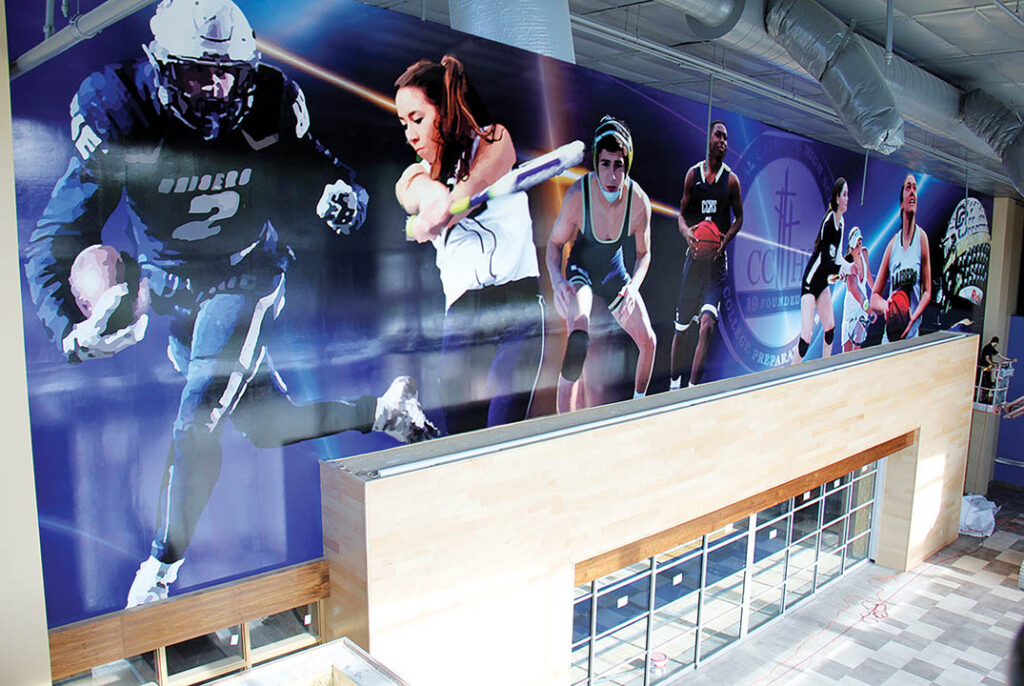
Most of the wall wraps we do are intended for long-term placement and are designed to extend a company’s branding across a large space. One of the largest wall wraps we did was for a local school gymnasium. The wrap included stylized images of kids playing and covered a space that was 29′ X 77′.
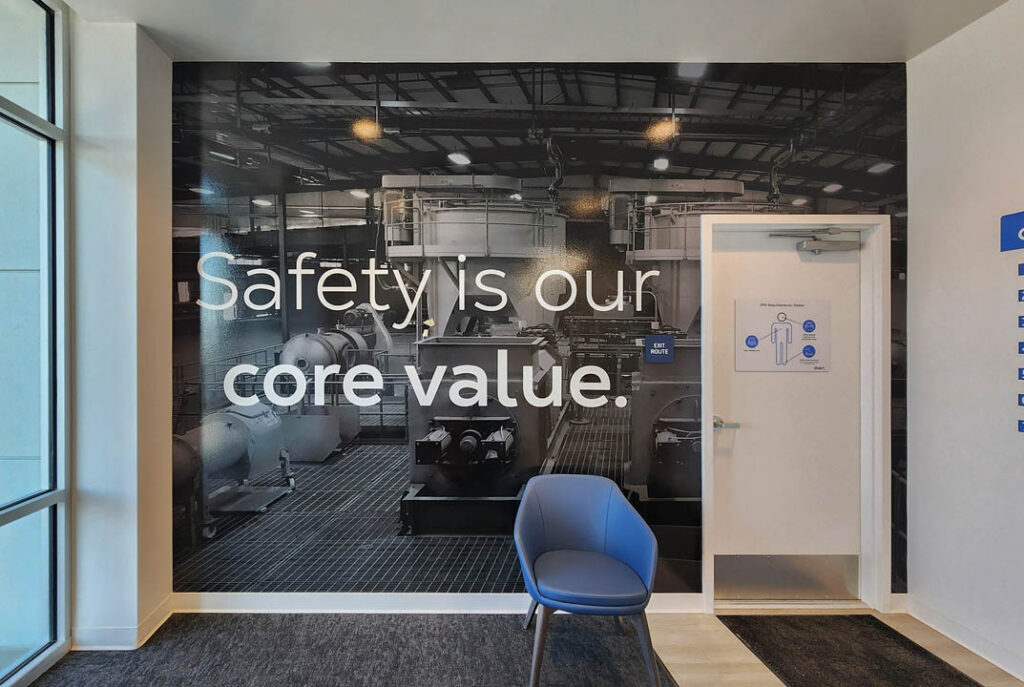
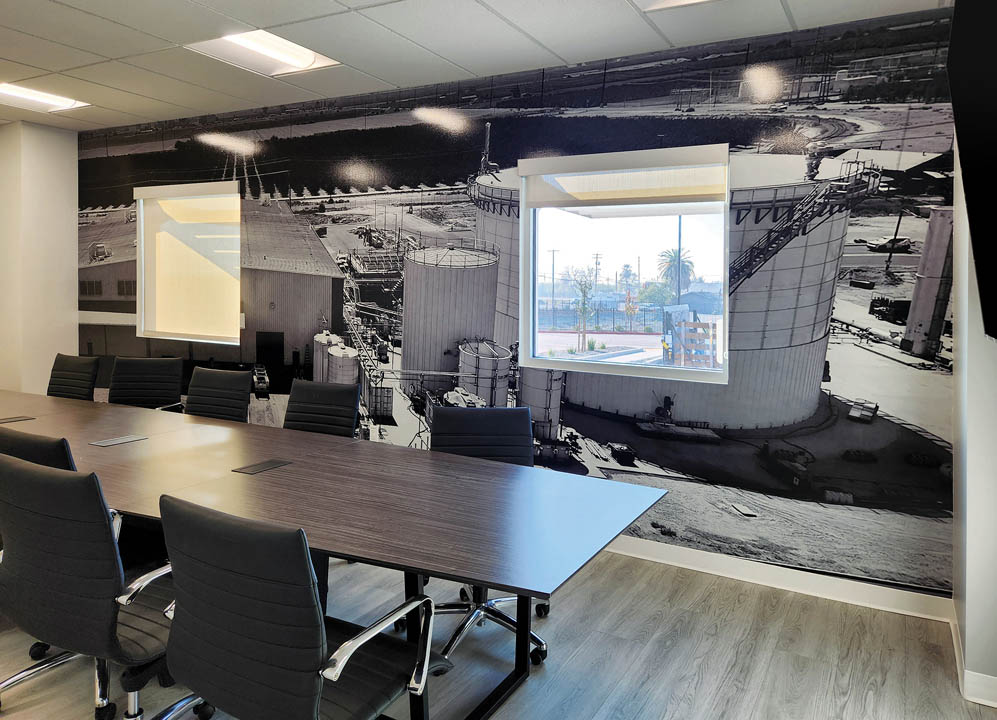
For a company that provides food waste services, we wrapped the walls of their conference room and a wall in the lobby entrance. These murals depict the manufacturing side of the company and reinforce its mission.
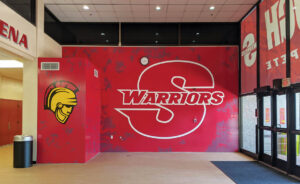
When a college in our area wanted to create large-scale graphics in the lobby of their athletics building, we incorporated their logos and Pantone colors to create a mural that wrapped multiple walls. This reinforces their branding and creates a subtle but impactful impression for visitors.
With specialized tools, we’ve also been able to extend our wall wraps over brick and textured spaces. This takes extra prep and specific tools, but it opens up your capabilities.
Wall test
 For most of our wall wraps, we use the same 3M wrap media that we use for our vehicles. It adheres well and allows us to stock one media. But, it’s important to check your specific space to see what material will work best.
Before we do any wall wrap, we always perform a wall test with a 3M Graphic Film Adhesion Test Kit. This kit helps you check how a graphic will stick to a wall by measuring its adhesion strength. After cleaning a sample section of the wall you intend to wrap, you perform a pull test with a film strip to see if the graphics will adhere long-term.
Media options
Since we specialize in commercial spaces, a lot of our wall wraps are advertising or branding reinforcement. There are different media options for the vinyl itself, as well as for the overlaminate finish. A luster finish for wall graphics is a good option to reduce glare but provide a nice sheen.
Textured and fabric wall coverings are also options for commercial and residential spaces, but are not something we get a lot of requests for. If this is an area that interests you, then check into 3M DI-NOC architectural finishes for a huge selection of patterns, colors, and textures that can transform interior spaces. 3M also offers specific training for these types of wall finishes.