There’s an old-school mindset that says leaders have to be feared to be respected. That the “bad guy” boss gets results. Maybe that worked once, but today’s workforce sees right through it. Employees don’t want a boss to fear. They want a leader they can trust.
I think it’s easy for bosses to commiserate with other bosses about how “no one wants to work these days” while ignoring the very heart of the matter, which is why that saying exists. Almost every trade show I go to, I’ve had someone asking me how I get my employees to be sold out for our shop and take ownership, or how I hire the right staff for the job, and I’m telling you now, more often than not, we are having to force our team to not work more hours than they’re scheduled for, to not show up at live events just to hang out and help their team, to not spend countless hours of their time thinking about how to improve this place.
I am so grateful to have that problem instead of the inverse, but I often kind of shrug and think we’re just lucky, instead of giving it actual thought. In actuality, there’s a lot that goes into creating a trusting work environment where your staff wants to come to work and do well at their job.
When the pandemic hit, we saw a rapid shift in work-life dynamics that is continuing to evolve. The pandemic provided proof that a lot of jobs could be done from home and virtually, that employees had value and rights and power that were undermined before then. A lot of workers realized they didn’t want to live to work, but rather they wanted their work to be a fulfilling and enriching part of their lives that supported the rest of their lives. I believe pretty strongly that whether you think that’s a good thing or a bad thing dictates how you manage your staff.
 This new employee-driven workforce challenges bosses to take a critical look at how they speak to and treat their staff. At a symposium we recently attended, I heard the term “psychological safety” in regard to being the No. 1 reason employees felt happy at work. Psychological safety means the worker feels safe and comfortable bringing new ideas and concerns to you, talking about personal issues that may be affecting their work, and trusting that you have their well-being in mind when you make decisions for the company.
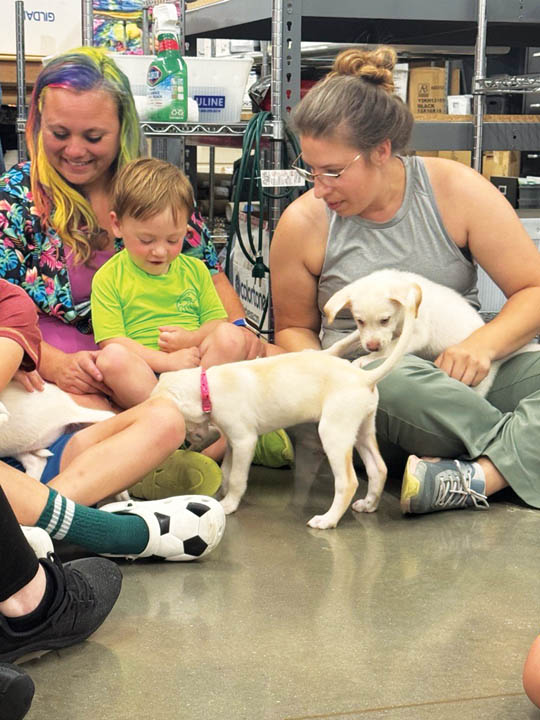
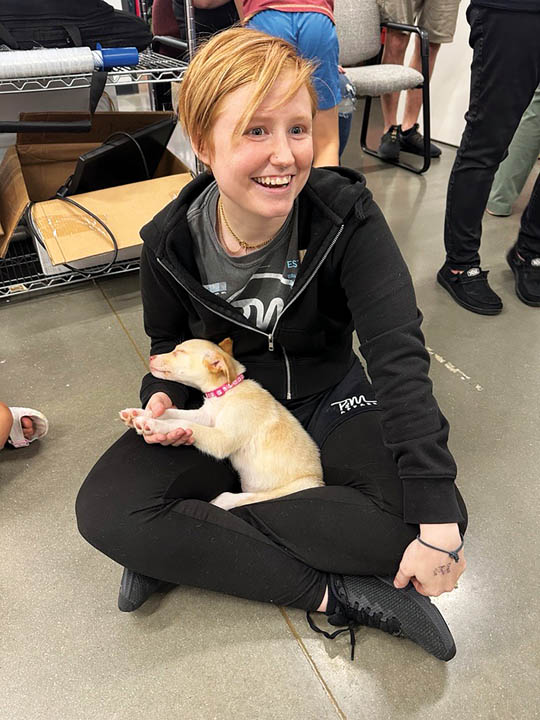
We do a lot of work perks like meals and potlucks, we celebrate sales goals with things like massages during stressful quarters, and last year we even brought in a bunch of puppies from the local rescue, one of which came home with one of my team. But this alone is not a flex on psychological safety because that’s not it. Those things are great bonding moments, but if I do that and then the rest of the time I’m a tyrant that everyone recoils from when I walk into the room, those things don’t mean much.
So, how do we facilitate trust among our team? The easiest and most difficult answer is to be genuinely trustworthy. Because people can see if you’re faking it. If a worker’s dog needs to go to the vet and they’re all distraught about it, genuinely care about what they care about, and provide flexibility to let them take care of what they care about. If someone’s kid is sick, let them work from home if possible until the kid is better. If someone looks upset, lend a listening ear. These things will be disruptions, they will be inconvenient, they will cause you to be vulnerable, and they will take a lot of your time, but they prove you care more about them than the T-shirt. It proves they are worth investing in, financially, but also with your time and energy.
At three months and six months after hiring, your employee is not at their full potential. This is when you’re investing the most in your employee and won’t really start to see returns on that investment until after that. So, if you’re not treating them well and building psychological safety, then you’re just starting that investment cycle over every time an employee leaves.
Facilitating trust also means trusting them back. I could not value micromanaging less if I tried. I am all about giving projects to other people, hearing their ideas and insights on different things that could make our company better, and believing my management team can handle big conversations or run the shop without me. It takes a huge load off our shoulders to trust the staff we believed was capable of the job from the moment we hired them, and feeling worthy of trust is a big value most people don’t realize they have for themselves.
This is sometimes a hurdle we have to overcome from staff who’ve had bad-guy bosses in the past: the idea that you are given certain things, or not given certain things, because we don’t trust you. Or that you will be yelled at if you make a mistake. I want my business filled with people who have different backgrounds, perspectives, opinions, and ideas than me. I’ve found that when I’m frustrated at a client or trying to skimp a bit on quality to get the job out, I can really depend on my team to hold the line and make sure the standards are clear, even when my feelings are substandard. Also, I’m human, and I don’t know everything; if there’s a better way to do things, I want to know so we can get better.
When considering how to trust people back, a big mind shift I had to overcome was considering neurodivergence a weakness when it’s really a strength. A lot of our staff have ADHD or are on the autism spectrum, and I felt like I was struggling to manage all the typical behaviors associated with my “neurospicies.” But I hate micromanaging and did some studying on how to manage ADHD in the workplace. And the info was revolutionary: Understand how a neurodivergent brain works, and you unlock all the creativity and passion for their work. Instead of trying to fit a square peg in a round hole, we started training differently, adding “quiet times” for focus, finding projects and clients that really appealed specifically to the person.
We added some nonverbal communications to let people know about availability, added opportunities for lots of one-on-one conversations, and even the way we communicated in those conversations to make sure it was absorbed correctly. I’d be lying if I said I did this all myself, too — most of this came from my team voicing ways they learned, listened, or worked best, and we responded. As we focused on the person and what their specific brain can do for the job instead of forcing them to do the job the way it had already been done, we saw a major increase in productivity and idea creation.
The environment has to be safe and trustworthy as well. We take a lot of steps to make sure our staff feel like our shop is a safe space where they can be themselves without fear. This looks tiny, like menstrual products in gender-inclusive bathrooms, or big, like breaking up with clients that want to create offensive products or say offensive things to our team members. We are not going to bring someone on board if some of our team think it’s a really bad idea. It also looks silly and nerdy like hosting Dungeons & Dragons on Sunday afternoons or going to bingo raves together.
The great thing about a culture of trust, of hiring people who are interested in growing your business the same way you are, of paying your employees so they feel valued and part of the reason for your success, is that it extends into the client sphere. If the employee feels safe, trusted, respected, and valued, they’ll behave with integrity and trust. They’ll produce a quality product with a high level of service. They’ll create loyalty with the client and represent your company honorably and respectfully. And that’s the big secret that’s not a secret. If you genuinely prioritize your people over profits, they’ll turn around and make you profits.