Most recognition projects do not begin with a sketch or a material choice. They begin with a few words in an email: An award. A keepsake. A deal toy. A gift.
Those words do more work than we may realize. Long before a file is opened or a substrate is chosen, the language around a project quietly defines what the object is supposed to be, how serious it should feel, and how much care the client believes it deserves.
In practice, language is often the first design decision, even though it is rarely treated as one. For graphics professionals working in awards, signage, promotional products, and custom fabrication, understanding this dynamic can change how projects unfold and how clients perceive the value you bring.
Language sets expectations before production ever starts
 Different words carry very different assumptions.
- An “award” tends to signal formality and hierarchy.
- A “trophy” implies competition and visibility.
- A “plaque” suggests tradition and predictability.
- A “gift” often carries a sense of disposability.
- A “deal toy” sounds informal, even playful.
- A “deal marker” suggests significance and longevity.
None of this is written into a spec sheet, but clients bring these assumptions with them anyway. Those expectations shape everything that follows, including how flexible they are on budget, how patient they are with process, and how critically the finished piece is judged.
When expectations and reality line up, even a simple object can feel right. When they do not, even excellent execution can feel like a miss.
The unspoken question of lifespan
One of the most overlooked aspects of recognition design is how long the object is meant to matter. Is it supposed to live on a desk for years? Be displayed publicly? Be photographed once and then put away? Be kept as a career milestone? Language answers these questions without anyone saying them out loud.
When a client calls something “just a small gift,” they are usually signaling a shorter lifespan than when they call the same object a “commemorative piece.” That signal affects decisions about materials, finishes, scale, and detail, even when the budget looks identical on paper.
For people who actually make these objects, this is not abstract. It shows up in tolerance for imperfections, appetite for iteration, and willingness to invest in the right process.
Where many production problems really begin
In most shops, recurring frustrations are framed as production issues.
- Too many revisions
- Overloaded layouts
- Compressed timelines
- Disappointment despite solid craftsmanship
Often, the root cause sits much earlier. Calling something a “marketing item” invites overbranding. Calling it a “keepsake” encourages fragility. Referring to a project as “just a quick thing” quietly justifies rushed decisions that later become expensive to unwind.
When the framing is vague or mismatched, the object is asked to do too much or too little. By the time that tension shows up, it is already late in the process.
Deal toys as a useful case study
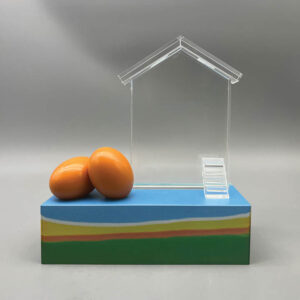 Deal toys offer a clear example of how language can lag behind reality. The term itself started informally, yet many modern deal toys are carefully engineered, materially sophisticated objects meant to commemorate major financial events. They are often kept for decades and displayed alongside meaningful career milestones.
The casual language has remained, but the expectations have changed. That mismatch can create confusion for clients and producers alike. It also highlights a broader truth in recognition design. Words tend to stick, even as the objects they describe evolve.
From vendor to trusted expert
One of the most effective ways graphics professionals can elevate their role is by helping clients choose better language at the start of a project. This does not require selling or persuading. It requires clarity.
A subtle reframing, from “just a giveaway” to “a commemorative piece,” or from “a quick award” to “a permanent recognition object,” often changes the entire tone of the conversation. Design decisions become easier. Material choices make more sense. Revision cycles shorten.
More importantly, clients begin to feel guided rather than processed. This is where expertise shows up. Not through equipment lists or production jargon, but through judgment.
Craftsmanship includes how a project is framed
Great recognition objects are not defined only by how they are made. They are defined by how well their purpose is understood from the beginning. Words shape that understanding. They influence decisions long before files are finalized or machines are turned on.
For professionals who want to grow the value of what they offer, paying attention to language is not theoretical. It is practical. The shops that earn the most trust tend to do one thing consistently. They help clients think more clearly about what they are creating and why.
Over time, that is what separates vendors from authorities. In recognition design, the object is physical. The meaning is not. The bridge between the two is often just a few carefully chosen words.