Shops within the graphics and promotional products industry lean on various tools, equipment, and techniques to conduct day-to-day business and deliver exceptional results. The technology at the core of such hardware operates in a constant state of ebb and flow — characterized by rapid innovation followed by a period of stabilization. During this process, the market naturally drives out inferior or inefficient methods.
While computer numerical control (CNC) machinery, an automated manufacturing tool controlled by preprogrammed computer software, has remained relatively unchanged throughout the decades, it continues to withstand the test of time — providing tried-and-true performance for users across countless industries.
“It’s like a vehicle — with a motor, wheels, and tires that get you from point A to point B. The foundational concept of CNC is the same, but there have been significant advancements in areas like digital registration, specifically the optical resolution of the camera capabilities,” said Thomas Tuck, senior manager of regional sales and marketing initiatives at C.R. Onsrud.
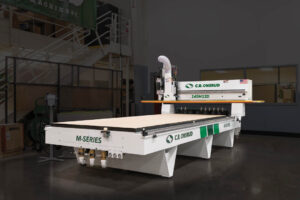
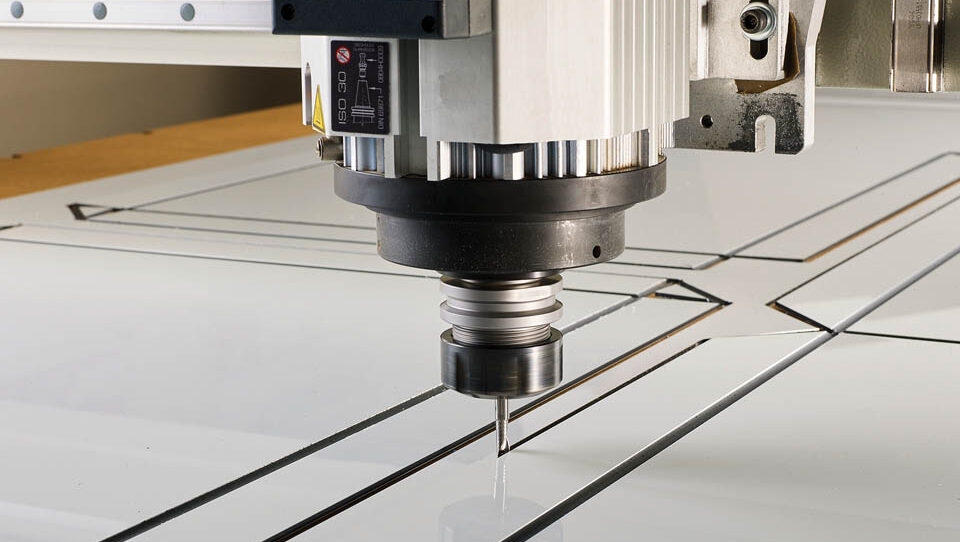
CNC machinery, including routers, laser and plasma cutters, lathes, and even 3D printers, is used to precisely cut, shape, drill, or mill various materials into complex parts. CNC routers, in particular, excel on sheet and plate materials like ACM/MCM, aluminum, plastics, wood, composites, foams, laminates, and many nonferrous metals.
“They’re not the right tool for thick, ferrous steels or hard alloys that require slow, flood-cooled milling centers. Instead, routers prioritize speed and sheet handling over heavy hog-out of hardened materials,” explained Abdullah Umair, marketing manager at AXYZ.
During the machining process, G-code instructions direct exact movements, speeds, and depths to craft intricate designs from a digital CAD file. With CNC, operators create, engrave, and shape diverse products like prototypes, aerospace components, engine parts, medical implants, custom furniture, and jewelry.
CNC machining is revered for its versatility in the graphics and promotional products industry as well, producing everything from dimensional signs and graphics to retail display parts and promotional products. For many years, shops have relied on the equipment to maximize output by streamlining tasks that are traditionally done by hand and delivering higher quality, tighter tolerances, and repeatable consistency.
For example, measuring, cutting, and finishing can be programmed and executed by a machine that moves with precision down to thousandths of an inch, producing parts that match the design every time. Meanwhile, special features like vacuum zoning, automatic tool change, nesting, and pendulum processing grant operators the peace of mind to safely and securely automate a job and prep the next.
“Many of our customers complete the same task over and over again, so production and replication are a big deal,” stated Mike Pilgreen, director of operations at Phantom CNC Systems. “Some machines have limitations when going from substrate to substrate, but a shop using CNC just has to change the bit when working with different materials like aluminum and plastic. The machine does the rest of the work — it’s that simple.”
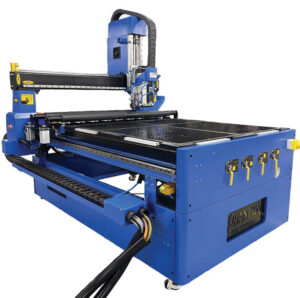
Once upon a time, such tedious tasks were all manual.
“Those who make the transfer from manual to CNC are head-over-heels in love. It cuts out so much labor, saves time, improves efficiency, and increases output,” Pilgreen said.
Careful considerations
According to industry professionals, CNC machinery is a time-tested investment that allows shops to grow in three basic ways. First, the equipment expands capacity because the machine can run long shifts. As such, the additional uptime allows businesses to confidently accept larger orders. CNC capabilities also improve quality and consistency, leading to less rework and reduced scrap. Last, the equipment helps businesses diversify and scale up due to its diverse material compatibility.
Regardless of the brand, feature, or cost preferences, Pilgreen reminds prospective buyers to “purchase their second machine first.” Those who make the right investment upfront, help staff overcome the learning curve, and stick to the maintenance schedule will reap the benefits for years to come.
Like any technological investment, “You get what you pay for.” Inferior quality will produce inferior results. Today, an entry-level option is $3,000-$5,000, with a 4′ X 4′ setup hovering at $13,000.
“An auto tool changer 4′ X 8′ production is [in the ballpark of] $40,000. You can run it 12 hours a day, and it’s never going to stop humming,” Pilgreen stated, noting other models top six figures.
According to Tuck, various factors influence such widespread prices. While the foundational elements of the equipment are solid, remaining relatively unchanged at its core from generation to generation, he said “drip advancements” in technology and components have resulted in a fine-tuned experience for users.
“Any aspect of technology is typically more expensive when it’s in its infancy. The same is true in machinery — there’s inferior and advanced technology,” he stated, pointing to stepper versus servo motors as one example.
Tuck said the overall speed, reliability, and accuracy of the tool itself, plus how the component(s) wear over time, are all intricately linked to the technological quality driving comprehensive performance.
“If I want the machinery to go to a certain point on the table and at a certain speed, for example, then one technology will accomplish the task more quickly and more accurately compared to the other,” he said.
The same concept applies to the spindles and tool holders. Likewise, when it comes to the control system, which serves as the brain of the machine, reliability and performance will vary at different price points.
Tuck admits buying at the leading edge of technology comes at a higher investment cost, “but if the [ultimate] goal is to produce more and have greater profitability per day, per week, per year, and per machine, then focusing solely on price as a deciding factor will introduce other limitations that prevent the company from maximizing its potential.”
In order to choose the best product upfront, he encourages business owners to consider, at a minimum, a five-year plan.
“Is this piece of machinery going to create a ceiling that I need to overcome yet again in a few years, or am I investing in something that gives me room to grow, so I don’t need to add multiples down the line?” Tuck posited.
For example, he said CNC machinery is limited in scope based on its size. It is less a question of capability and more so the height, length, and width of the material.
“This is an important consideration for growth. The size you’re working with today may not be the size you aspire to incorporate in the future,” Tucks said. “Ask yourself: what are my growth plans and vision? How does that line up with my options?”
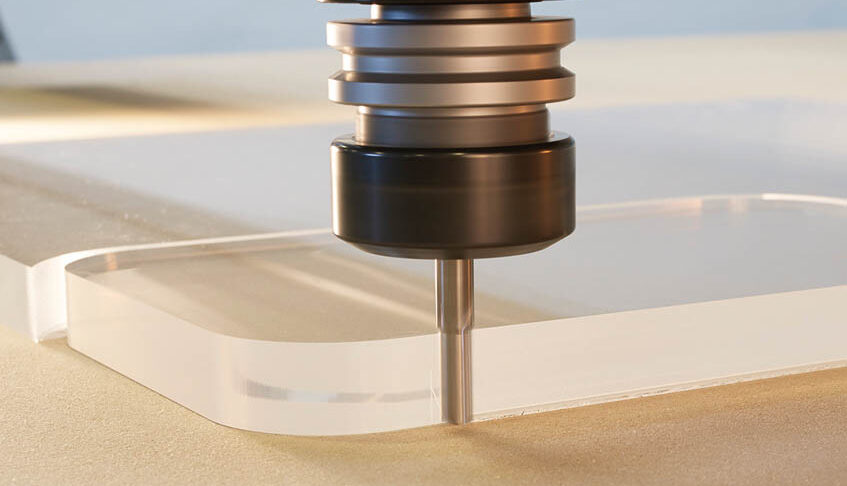
According to industry experts, shops should focus on the basics when considering CNC machinery, from the facility setup, floor space, and material staging to loading and unloading.
“Plan where everything goes and ensure you’re not limiting production by putting it in an area that creates a bottleneck,” Tuck added. “A good general rule of thumb is whatever the table size of the machine is, you should try to accommodate three times that size for adequate space for other things.”
Umair agreed, noting to confirm if the facility can support the router’s electrical requirements and overall power capacity. For example, consider if there is adequate power in single or three phase and what number of AMPs are available on the electrical panel, both of which are important to run the machine and vacuum pump.
“Addressing these items upfront helps ensure a smoother installation, faster ramp-up, and better results from day one,” Umair said.
In addition, he says owners should weigh complementary upgrades and accessories as part of the purchase as well, including an automatic tool changer, vacuum hold-down with zoning, a dust collection system, a nose rider or pressure foot, a misting system for aluminum, a drill head for hole patterns, and specialty tooling packages matched to the main materials they cut.
Once equipment and accessory purchases are made, the owner should assess the team’s current skill level and make proper accommodations for professional training. Most industry professionals agree there is a small learning curve, but it is manageable with active support.
“Sure, there’s a bit of an intimidation factor with the big CNC machines but, the truth is, if you learn to run a 2′ X 3′, then you can run an 8′ X 14′,” Pilgreen said, noting software awareness is one of the biggest hurdles to overcome. “At the end of the day, all your work is done in software — and it does exactly what you tell it to do. So, once a user knows how to navigate the program, things fall into place.”
What is important to remember is that CNC machinery is simplified and more user-friendly than ever before, with robust support available to operators.
“With every CNC router purchase from AXYZ, on-site installation and training are included to help operators get up to speed quickly and confidently. We support customers through the full process, from file preparation and programming through day-to-day operation and ongoing maintenance,” Umair assured.
Maintenance matters
To operate at peak performance, CNC equipment requires general upkeep and routine maintenance like any other technological investment. Owners are advised to consistently clean, collect debris, and replace necessary parts to maximize the return on investment.
While a regular maintenance schedule provides reliable, high-quality production, increased efficiency, and extended equipment lifespan, taking shortcuts may result in unexpected breakdowns and costly emergency repairs.
“The frequency of maintenance is tied to how often you’re using it,” Tuck said. “The more I drive a vehicle, the more I need to change my oil and rotate the tires. Similarly, most manufacturers have a checklist and tutorials of daily, weekly, monthly, and quarterly care to keep CNC machining in top shape, so the tool will last.”
Above all else, Tuck and Pilgreen advise owners not to overlook spindle maintenance, from tool holders to the spindle cooling method itself.
“These are high-dollar items [with an important role in production] and a leading source of profitability. If they’re neglected, you face serious downtime,” Tuck noted.
He pointed to the CNC collet as another important example of maintenance. Made of hardened steel, the conical-shaped clamping device is used to securely hold cutting tools or workpieces in a machine spindle or holder. By tightening a surrounding nut, the slotted, elastic collet collapses uniformly around the tool, providing high-precision, centered, and rigid gripping for tasks like milling, drilling, and turning. It is an invaluable asset to production and should be replaced every three to six months, depending on usage, according to Tuck.
If the collet isn’t replaced, then vibration can be introduced, impacting how the spindle rotates, along with the bearings inside that spindle, or killing the component altogether.
“Say you’re running a spindle through hardwood or ACP plastic. You hit a spot, and it starts screaming. The spindle is basically being built to control that vibration response, which will ramp up or down the spindle to get through that area of stress,” Pilgreen said, emphasizing that chattering spindles cause precision problems.
“Ultimately, the greater the vibration, the quicker the machine failure,” he added.
In addition, Pilgreen said lubricating CNC gantry rails is critical to preventing excessive friction, wear, and heat generation, which directly ensures high-precision cutting, prevents mechanical failure, and extends the lifespan of components. Without lubrication, the gantry may bind or move erratically, resulting in poor surface finishes and inaccurate cuts.
“Make sure the control and electronic cabinet have air flow as well,” he added. “When things go wrong, it’s usually associated with heat and dirt. If the cabinet is kept straight and clean, allowing proper air to roll through, then there’s a much smaller chance
of issue.”
When parts do fail, it is critical for business owners to be tapped into a reliable supply chain for replacement items.
“Supplies and service support are readily available through AXYZ. We have service technicians located across North America, the U.K., Europe, and India, which helps ensure timely support for maintenance and repairs,” Umair stated. “For parts and consumables, CNCShop provides access to aftermarket replacement parts and router bits, making it easy to keep common items on hand and minimize downtime.”
Located in North Carolina, C.R. Onsrud Inc. manufactures many of its own components and keeps those parts readily available. When it comes to service and support, Tuck feels their domestic home base provides an advantage strategically, operationally, and economically.
For Pilgreen, it is less about where a component is sourced or welded internationally. Instead, the focus is on quality, dependability, and accountability.
“Make sure you’re dealing with a partner who not only stocks the parts you need, when you need them, but also has more than enough on hand to serve various customers in a pinch,” he said. “While we proudly tout key international partners, we have a warehouse full of parts and supplies right here in the U.S. for everything we sell.”
Looking ahead
Understandably, with AI dominating headlines, people are anxious about immediate job displacement, long-term ethical concerns, and the erosion of human skills, but industry experts agree that CNC machinery is future-proof.
“Is the physical craft of CNC machining destined for the digital scrap heap? The short answer is a resounding no,” according to the Institute of Machine Tool Technology. “The manufacturing world is firmly anchored in the physical domain. As long as we need airplanes, medical implants, and electric vehicles, [among other things], we need the subtractive power of CNC machines. AI acts as the navigator, optimizing toolpaths and predicting maintenance, while the CNC machine remains the indispensable vehicle of production.”