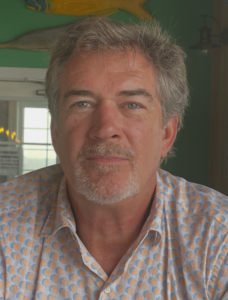
After years of retail site development, Greg Overstreet was looking for a new career. “My introduction to signage was overseeing sites of construction. One last piece of each project was making sure all signage was installed and functional,” he said. That’s still one of his goals with Overstreet Sign Contractors, a full-service sign company in Durham, North Carolina, that works with some of the area’s largest corporate, industrial, and medical facilities, to ensure their signage needs are met.
We talked with Overstreet about how he made the transition to owning his own sign company, what strategies he uses to keep his company’s overhead in line without cutting staff, and how he sees the role of digitally printed production in his business and the industry in general.
Q: Please tell us about how you decided to start Overstreet Sign Contractors.
A: I moved from Virginia to the Raleigh-Durham area. I managed three more years in that industry before I needed a change. Well before 1994, I had the entrepreneurial bug, and the signage portion I had been exposed to prior led to further exploration. I met with various folks who were in development and construction, who helped me realize that I was in a good market, ripe for someone to come in and provide full-service commercial-industrial signage.
I officially started this company on Dec. 1, 1994, right out of my house, using my bonus room as my office and the garage and backyard for my production. I hired a designer initially and followed with two installers within the first year of business.
Q: What products did you offer at the beginning?
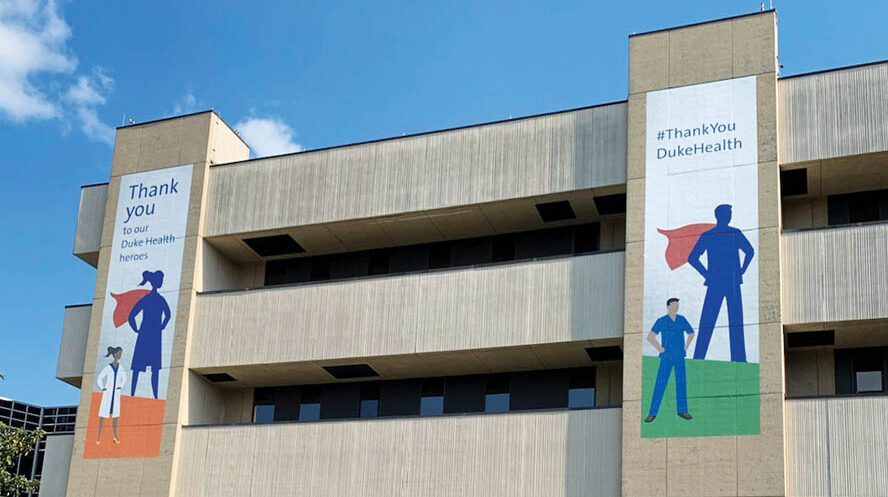
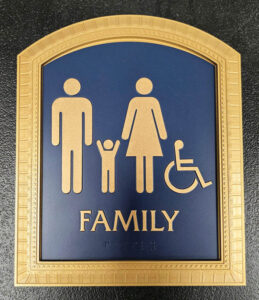
A: Early on, the focus was mainly interior, ADA-compliant signage, such as room signs for commercial buildings, etc. It became apparent early on in this venture that much more need to be fulfilled in our market. This led to our transition into other areas and niches encompassing cut and cast metals, fabricated products, laser production, and, of course, large-format reel-to-reel and flatbed printing that has ultimately led to our full-service capabilities.
Since our founding, we’ve seen unbelievable growth in our marketplace, which has fueled our success, though without getting too far ahead of ourselves.
Q: Can you tell us more about your facility?
 A: We are in our third location, which is about 5,000 square feet, though we need twice that much. We’ve been in our current location since 2003. Timing was excellent due to it being a new commercial development centrally located to our base, 15 minutes from Raleigh-Durham International Airport, and our ability to buy the shell real estate and customize our space.
The developer in 2003 just finished building the first eight-bay building, and my search led us to this facility, where we were the first owners in the development. Now, the development has long been completed with six flex buildings and multiple outparcel office buildings on its perimeter.
We are centrally located between Durham and Raleigh, on the edge of Research Triangle Park, and very well situated to service our base as well as for shipping and receiving in a timely fashion, both of which were the primary draws for this location. We do not have a storefront, per se, for walk-in traffic — our sales are outside. We welcome our clientele if the need arises, but we do not operate a counter, which has never been the desire or our business model. On-site meetings are generally required for capital projects and additional circumstances; otherwise, virtual meetings have found their place in our business when appropriate.
We currently have 12 employees: graphic designers, project managers, a print room manager, laser operators, warehouse [staff], and our installers. We have two boom trucks in our fleet, including a Freightliner with a 70′ boom and a one-ton crane. Leased equipment is used as needs arise.
Q: How did you develop your client base?
A: Fortunately, I’ve never advertised or had a reason to do so — it’s all referral-based. Early on, I developed good relationships with local general contractors. They provided me with an opportunity to get my foot in the door with a variety of clientele whom we still service today. Good news began to travel, I suppose, which began our path to success.
I’ve never laid off a worker, which I take pride in and illustrates [my] determination to locate the right personnel. We are conscious of making sure we cater to our niche in signage, trade, and the utmost service — which I can’t stress enough. There are a considerable number of sign companies that can fabricate and produce equal quality work; however, there are very few that take customer service to a grade above. I am fully confident that is what sets us apart from our competition.
Q: How have you structured your business?
 A: We are an S-Corporation. In our business model, I decided [that] in order to be a full-service sign company outside of our in-house capabilities, our objective was to discover and implement the best resources in the wholesale industry with whom we would partner to fulfill all objectives. While exhaustive, this approach has proven itself to be perpetually effective. We realize our vendor base is critical to our success, just as our success is to them, which makes for extreme harmony.
While there is not much we shy away from, if at all, I knew there was no fathomable means to literally produce all we offer the marketplace in-house. Doing so would be a death sentence for us. We produce 25% to 30% of our revenue in-house. We have a base of eight to 10 vendors across the country that we pull in for any given project on the ground level, and we work together on all details through the process until completion. The bankroll required to purchase millions of dollars in equipment — not to mention ensure it is continually operating — is a heavy lift for any company.
We essentially design all projects on the front end, coupled with field work (if required), including surveying properties, preparing interior sign plans or exterior sign elevations, and site plan signage locations. We provide clients with scale drawings for their approvals, establish pricing, and oversee the entire project [from] start to finish. Whether in-house production or not, we continually monitor fabrication progress in order to coordinate respective installations to be scheduled upon completion or receipt. As with any business, turnaround without sacrificing quality is paramount for proper cash flow and growth.
Q: What products do you produce on your digital printers?
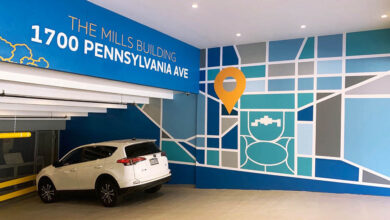
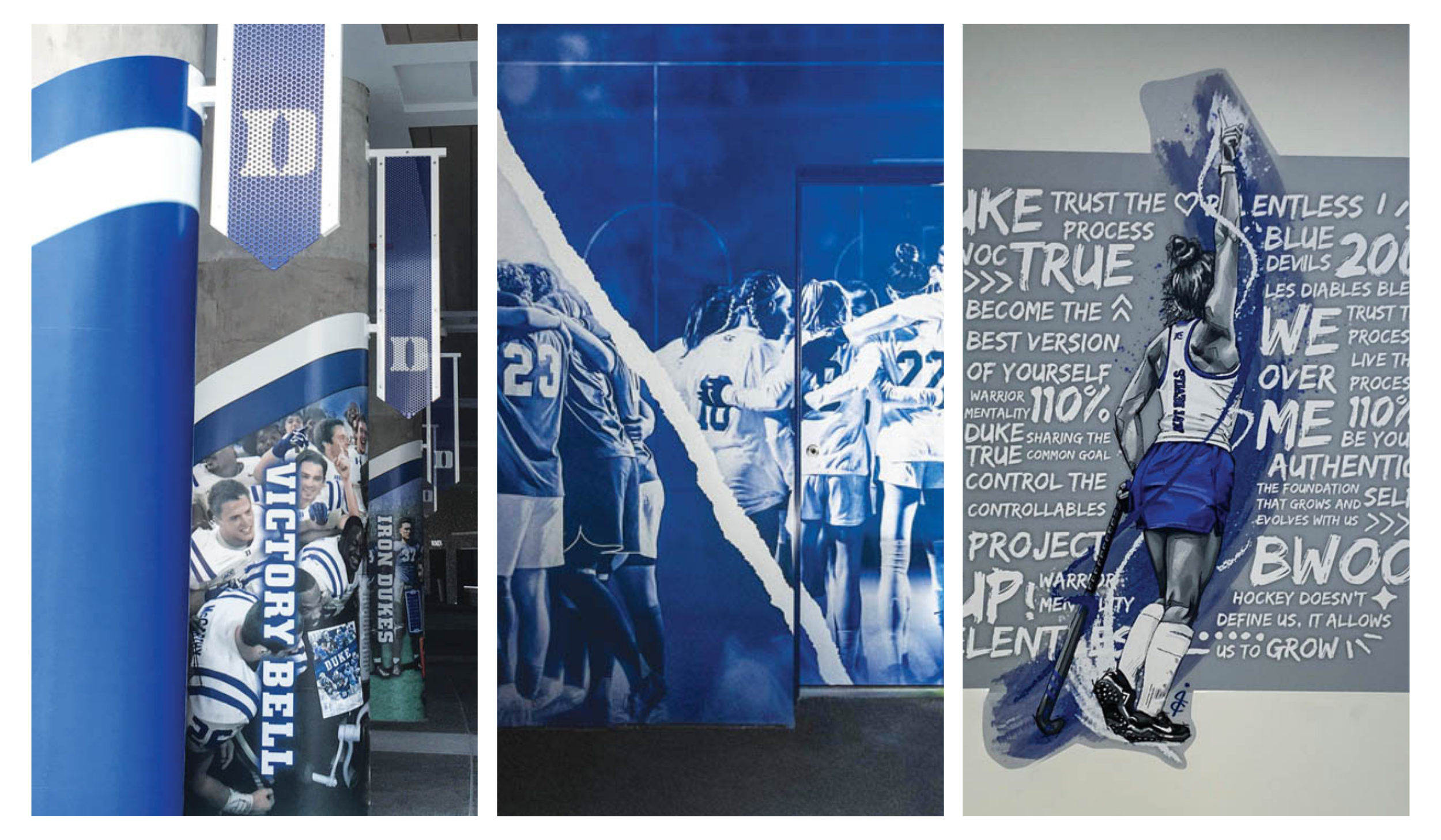
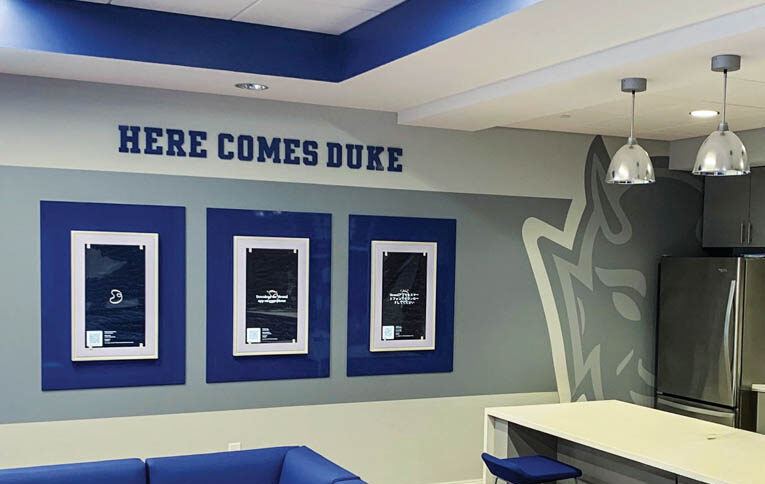
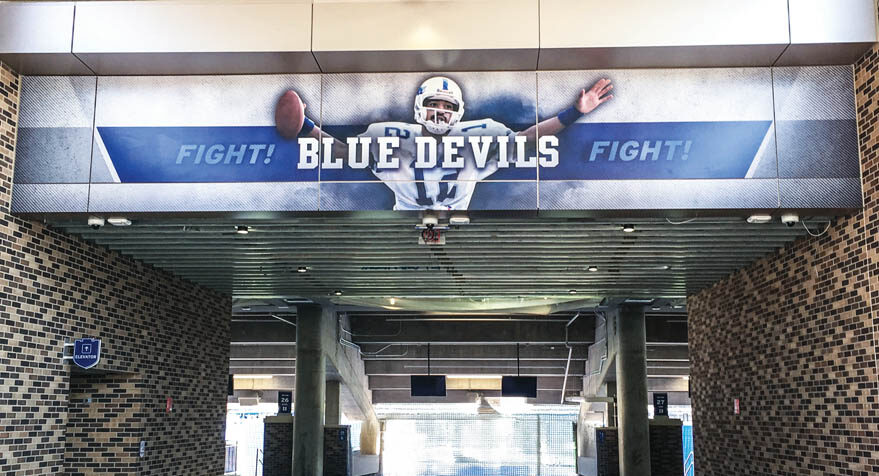
A: We produce wall graphics, construction fencing and signage, contour-cut graphics, and interior signage, amongst a variety of other items. I view this capacity as a separate profit center to fulfill these requests of our base and others.
Our use of Roland DG devices goes back to our relationships with other sign shops early on. One of the owners of a franchise we worked with used Roland DG printers, which always provided the product we needed. I hired two of his employees after he closed his business to pursue other opportunities — both of those staffers have been with me since 2009 and 2010, respectively.
Having eco-solvent ink printing capability with our Roland DG printer/cutter has been very useful in what we do for a variety of projects. This machine is extremely important to us, especially for printing construction signage or other media where a two-to-three-year life expectancy is needed. We enjoy the comfort [of] knowing eco-solvent ink is incredibly durable and will stand the test of time.
We also use digital printing for interior wall graphics and window graphics. The color capabilities of our printer/cutter have really been impressive.
Q: What made you decide to acquire a UV flatbed printer? What types of projects have you used it for?
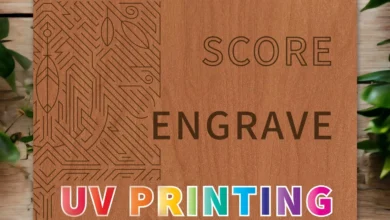
A: We’re still getting familiar with its capabilities; however, we’ve used the Roland DG UV flatbed for interior ADA-compliant signage. We have used a variety of substrates, which further allows us to meet and adapt to interior finishes, etc.
Q: What sets your business apart in the industry?
 A: I believe we are defined by quality product, lead-time, and the service orientation of our total package. Being a business major coupled with pretty good instincts, I was able to position this idea 31 years ago into reality. I enjoy the outside sales and educational side of our business the most. We maintain a great client base, and there is nothing I enjoy more than being involved with them at all levels.
I believe our years of experience and know-how bring a level of service that truly focuses on the needs of our clients. We absorb their concerns and turn our response into a knowledgeable, direct plan. It is gratifying to fully encapsulate the needs of our clientele and produce a successful outcome.
The most important element in all this is integrity, and words do matter. If I tell you that you’ll have something by Friday, you will have something by Friday. If I tell you we’ll install Sept. 1, we install Sept. 1. Customer service is a lost art these days in some areas, and the more we cater to our clients’ needs, I know we’ll be better because of it. While cost surely comes into play, service cannot be overlooked. Our clients can rest easy knowing we have lifted this aspect of their responsibilities from their plate to ours.
Q: What lies ahead for Overstreet?
A: Though we’ve purposely grown in baby steps over the years, we’re in an extremely favorable position with who we are, how we operate, and who we serve.
At 64 years old, I’m mentally still 40. At some point, there’ll have to be a change, but I’m excited about our current path. We are staffed professionally and proficiently, the equipment we operate is substantial and meets our current needs, the vendor relationships we have built over 30 years of business are sound, knowing none of this is possible without our client base. The trust with which we have benefited on multiple fronts over the years invigorates us to continue to provide our clients with the excellent quality and service they deserve.