A well-made basic tee is the little black dress of the modern wardrobe. Versatile and timeless, the garment is a personal billboard of expression, a staple piece in countless outfits, and proof that true style often lies in simplicity and quality craftsmanship.
According to industry professionals, investing in premium fabric and a flawless fit is far from indulgence – it is a practical choice in comfort, durability, and a look that consistently outperforms fast-fashion wear.
“T-shirt blanks have come a really long way. The quality has evolved from carded open-end cotton to combed ring-spun cotton, which feels softer and prints better. The whole category is more refined in fabric, fit, and overall style,” said Jacquelyn Bachner, content marketing specialist at S&S Activewear.

Nowadays, decorators are saddled with various consumer considerations when purchasing blank T-shirts, from intended use, material, and cut to equipment preference and cost effectiveness.
“First and foremost, it’s really important to know the target audience before buying blanks. You need to understand what the shirts are being used for and what customers actually want because there are so many different types of T-shirts to choose from,” Bachner said.
A one-size-fits-all approach is like a trap door leading to disappointment – and fashion faux pas. Since different demographics vary in their preferences, intended use guides fabric and fit choices.
“Choosing the right blank starts with knowing the right purpose. The use case drives material choice, budget, and print compatibility,” said Brett Bjorkman, chief executive officer at Next Level Apparel.
For example, a heavyweight tee lacks proper moisture-wicking and ultraviolet protection factor, making it unsuitable for someone who works in the outdoor heat all day; however, that same garment is ideal for embroidery or multi-technique decoration.
Similarly, a form-fitting cut may be best at a professional event, while a relaxed fit is preferred for casual, everyday use. Know thy customer.
From fiber to fashion
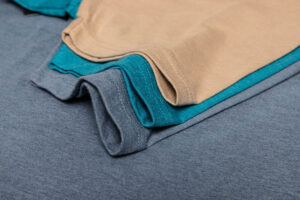
Modern decorators reach for fabrics with a smooth surface and versatile application. According to Bjorkman, hand-feel is the first sensory test: softness, weight, and texture determine perceived quality before the tee is even tried on for size.
“Heavyweights are trending because they immediately feel substantial and premium,” he noted.
As such, classic 100% cotton continues to be a top textile choice, especially in streetwear, lifestyle, creator merchandise, and fashion basics. The feel, breathability, and perceived high-end quality make it a perennial favorite.
“What truly allows us to deliver the best decoration results starts at the cotton seed itself. We work with only the finest cotton, engineered for a smoother, cleaner surface that enhances both print and embroidery,” said Jerome Thuillier, head of marketing, U.S., at Stanley/Stella.
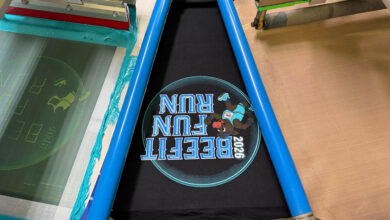
Consumers gravitate to the natural texture, plus it pairs well with popular decoration methods like direct-to-film (DTF) and direct-to-garment (DTG) printing – the latter of which provides a soft but vibrant print.
In addition to 100% cotton, decorators appreciate synthetic blends for their stretch, performance, and longevity, especially in the activewear, workwear, and outdoor segments.
Chief Value Cotton (CVC), which is typically comprised of 60% cotton and 40% polyester, is growing in popularity as well. Admired for its versatility and affordability, CVC is comfortable, durable, as well as shrink and wrinkle resistant.
“Quality should always be the starting point because the blank is the foundation of the final product,” Thuillier said. “Style and fit are just as important, since consumers now expect modern silhouettes that feel relevant and comfortable.”
Fabulous fit
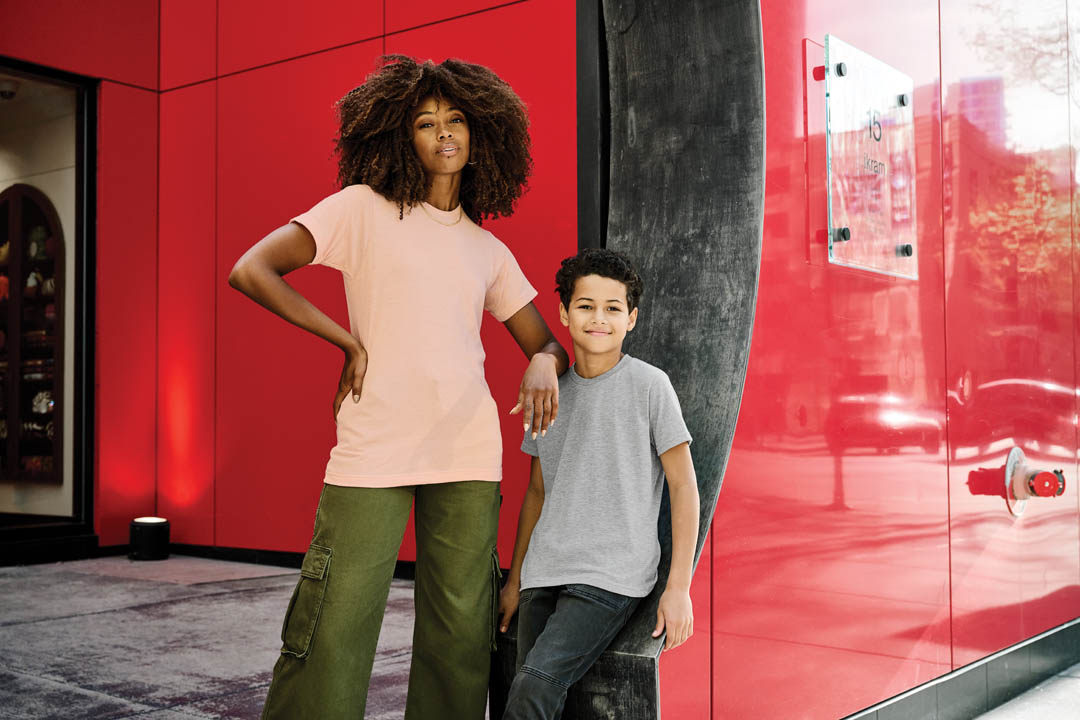
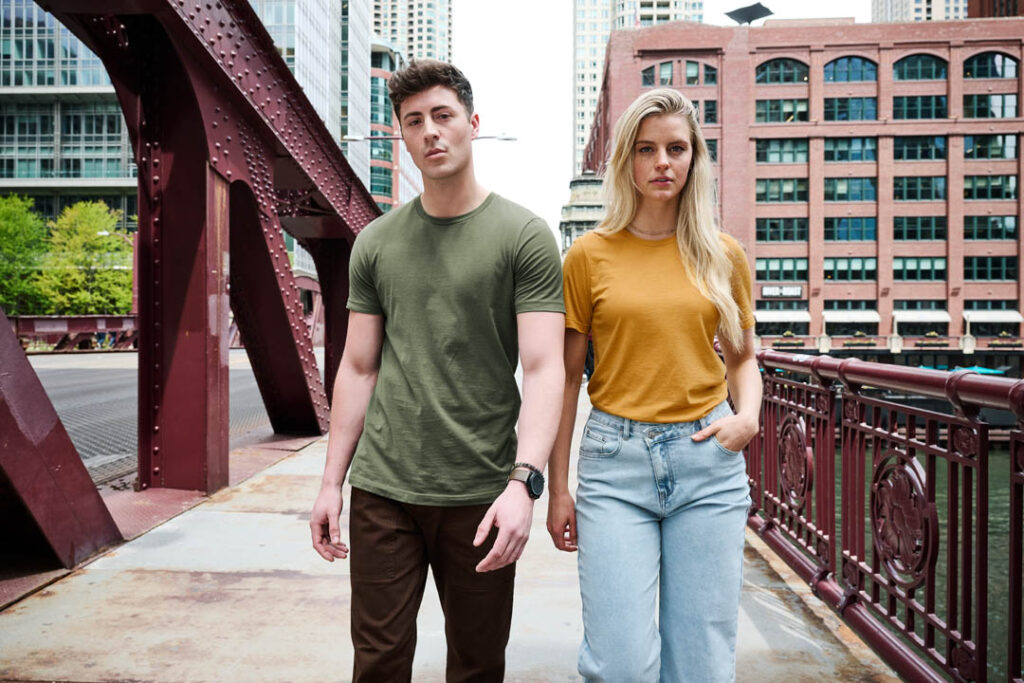
Today, men’s tees are overwhelmingly synonymous with the term unisex, a popular choice that is easy to stock but tends to have a straighter fit.
“Men’s cuts usually have a little more room through the shoulders and body, while women’s styles are more fitted and have shorter sleeves or a tapered waist,” Bachner explained, noting fit is impacted by how a shirt is sewn as well.
For example, a side seam creates a more retail-ready shape, while shirts without side seams look tubular and provide a boxier fit.

Youth apparel is its own unique consideration. Since it is often purchased online without being tried on, Bjorkman said visual appeal, standout design details, and clear e-commerce presentation are even more important.
“Fit matters, but aesthetics often drive the purchase,” Bjorkman stated, advising decorators to stay abreast of current trends but remain true to brand identity and customer expectations.
Given various nuances in fit and sizing, it is common for decorators to stick with a brand and style that consistently hits the mark in quality, comfort, and value.
“If you have to mix brands, however, the next best move is to compare the size specs and measurements to find the closest match. Pay close attention to details like fabric content and fit descriptions, which can help you get as close as possible to the same [shirt],” Bachner said.
Once decorators define their preferred standard fit, then suppliers can provide complete size-run samples.
“[Remember] different garments can have different intended fits – as long as you merchandise and communicate this clearly,” Bjorkman added. “If uniformity is critical, relabeling is a viable solution. A size is ultimately a designation. If one supplier’s medium aligns more closely with your standard large, reclassify it to maintain consistency.”
“The goal is to protect your brand DNA and ensure customers have a predictable experience,” he continued.
The right tool for the job
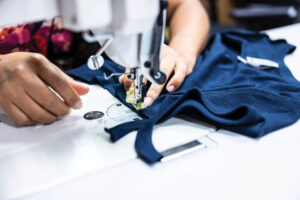
With no shortage of options on the market, decorators should keep fabric content, weave, and finish top of mind when choosing blank T-shirts. Marrying a textile with the right equipment ensures quality control and achieves the desired aesthetic.
The end result: a stamp of approval on the finished product and happy customers who are willing to share their positive experience with others.
“Be a yardstick of quality across all audiences,” Thuillier said. “Offer the right fits and the right colors to the right people. Add your creativity in terms of print and color to the mix – and make sure they want to come back for more.”
- Screen printing & DTG: Fine yarns and smooth surfaces work best. The 3600 (100% cotton) is ideal because it prints cleanly and requires less ink.
- Screen printing: CVC Blends/6210 are a “bulletproof” option – poly content provides stability, minimizes shrinkage, and resists torquing.
- DTF: Works well with most smooth cotton or CVC fabrics.
- Sublimation: Ideal for 100% polyester or fabrics with a high poly content, where the ink bonds directly to the fibers.
- UV printing: Benefits from stable, flat surfaces and fabrics with minimal texture.
There are a few innovative breakthroughs leaving an imprint on the category at large. According to Bjorkman, DTF is “revolutionizing the creator economy” by empowering designers to launch unlimited designs with essentially zero risk.
In addition, faster, more color-accurate DTG machines, plus hybrid digital squeegee technology, are both elevating print quality to mass-production levels. The latter is a hybrid approach using a DTG base layer with a screen-printed top layer.
“It blends the detail of digital printing with the vibrancy and durability of screen printing, enabling large-scale production with a premium look,” Bjorkman said.
He also sees more shops blending techniques like puff inks, metallic overlays, and gradient DTG/DTF combinations to create texture, visual depth, and artwork differentiation.
Color depth and dye consistency are particularly important for e-commerce brands requiring photogenic, repeatable visuals.
“E-commerce has fundamentally reshaped the blank apparel space by democratizing creation. Combined with DTF and DTG technology, it enables creators, designers, and brands to produce premium-looking products with an MOQ of just one. This means anyone – from emerging artists to large enterprises – can test unlimited designs instantly, without financial risk or inventory constraints,” Bjorkman stated.
“The result is a massively accelerated creative cycle, lower barriers to entry, and an explosion of niche products and micro-collections. In short: unlimited creativity, delivered at the pace of culture,” he continued.
Looking ahead

The upcoming year looks promising, led by diversification in fabrications, elevated quality, fashion-forward silhouettes, as well as curated color palettes. Suppliers are prioritizing focusing on premium materials, durability, consistent sizing, and customization capabilities.
From boxy and cropped to elongated and relaxed, silhouettes are becoming brand-defining features. Oversize and boxy options continue to dominate the market, but classic fits remain tried-and-true in the promo and uniform segments.
In addition, Bachner expects blank T-shirt trends to stay rooted in comfort and quality – but with greater texture and personality. More suppliers are offering 250 to 300 grams per square meter garments that mimic high-end streetwear. Retro sport designs are making a comeback as well, with ringer tees, stripes, and collegiate lettering.
“Most [people] still want something soft, but that thicker, more structured feel is back in a big way,” she said.
As the market leans into premium basics, data suggests heavyweight tees and performance styles that offer moisture-wicking and antimicrobial features will lead the way in demand. In fact, performance-enhanced blanks featuring UV protection, odor control, and sweat-management technologies are estimated to grow 15% to 20% by 2026, largely driven by the activewear and outdoor segments.
“Color range is another big factor. Brands want palettes that are consistent, curated, and aligned with what they see in retail,” Thuillier said.
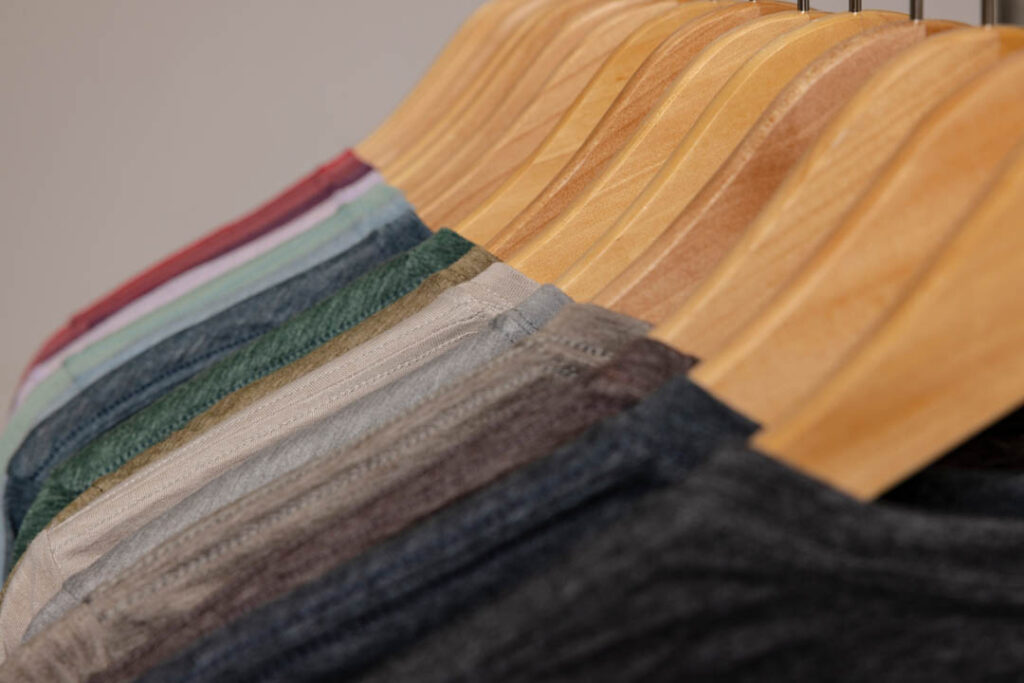
Color trends currently lean “soft and wearable,” with earthy neutrals like sand, stone, driftwood, faded olive, and coastal blues in high demand, alongside pastels and pops of coral, yellow, and lavender. Camo remains popular but is showing up in softer, washed-out tones.
In 2026, expect more pigment dyes, mineral washes, and garment-dyed palettes that give blanks a retail-ready aesthetic without decoration.
Sustainability continues to be front and center as well, with greater emphasis on eco-friendly fabrics, responsible manufacturing, and traceability. Innovations like low-water dyeing, closed-loop cotton recycling, recycled poly-blends, and biodegradable additives are critical components in company sustainability initiatives.
“At S&S, we are watching these shifts closely, so we can keep offering styles that blend comfort, performance, and everyday versatility — all the things customers are really looking for in their go-to tee,” Bachner said.
Business building
Reputable suppliers and distributors play an integral role in the entire process, providing consistency, confidence, and peace of mind in daily business operations.
“Your brand, your name, is the signature on the finished product. You want that signature to be associated with the best-quality blanks, supported by a brand behind your brand that is reliable, offers outstanding decoration results, and consistently delivers,” Thuillier said. “You also want a partner that knows how to add that little extra each season in terms of colors and styles – staying close to what is happening in the streets and aligned with emerging trends.”
While the basic value proposition of a great distributor is high-quality inventory — available anywhere at any time — the partnership extends beyond filling orders. A distributor with “staying power” integrates itself as part of the brand’s foundation, supporting long-term growth initiatives and ensuring that, as the business scales up, the product selection remains dependable and authentic at its core. As a result of partnership stability, creators and brands can focus on growing their business instead of managing supply headaches.
For Bjorkman, growth exists where new communities are forming. He encourages decorators to explore new events, niche markets, and online microcultures.
“The modern market isn’t dominated by one massive customer base — it’s shaped by countless small and midsize communities, each with its own identity and aesthetic,” he said. “In the digital age, growth comes from discovering and serving these pockets of culture, not waiting for them to find you.”