Studio 618, my story-driven signage and wayfinding consultancy based in Charlotte, North Carolina, was tasked to design a custom interior and exterior signage family as well as a unique fiber art focal wall (check out the March 2025 issue to read more about the fiber art focal wall element) for Taft Development Group’s property, Spinning Mill Lofts.
Once a historic textile mill, the property has been transformed into a mix of stylish amenity spaces and 25 loft-style apartments, surrounded by eight garden-style buildings in downtown Clayton, North Carolina. For this project, we aimed to design something timeless that tied in beautifully with SouthPark Interiors’ vision, reflected Yellow Duck Marketing’s clean, modern branding, and celebrated the building’s textile roots that make it so unique.
It all starts with the unit sign
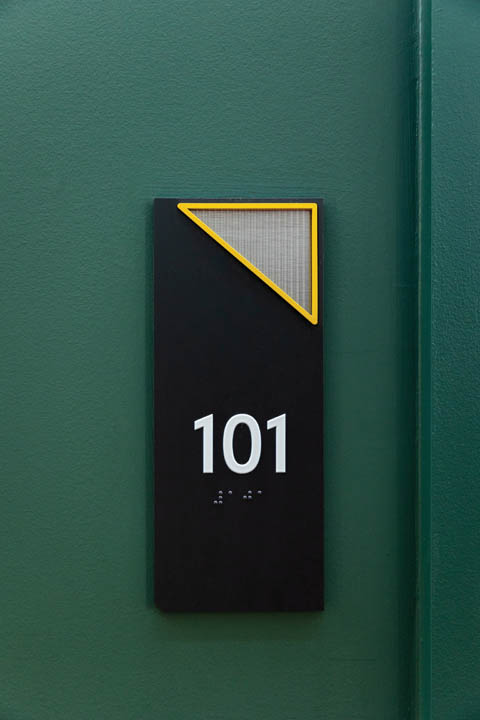
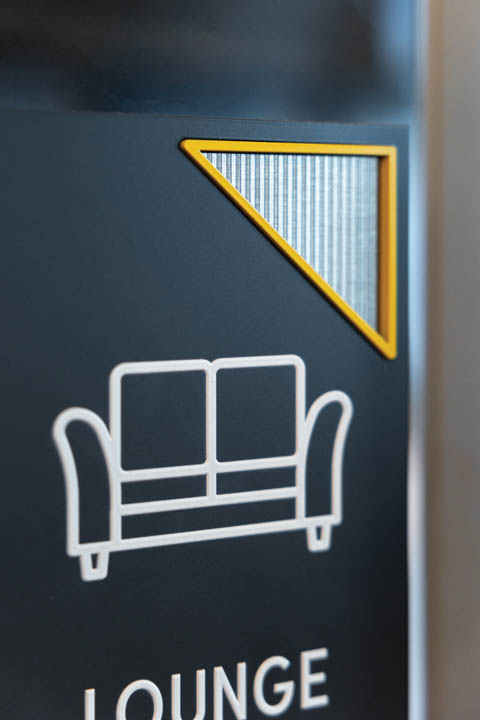
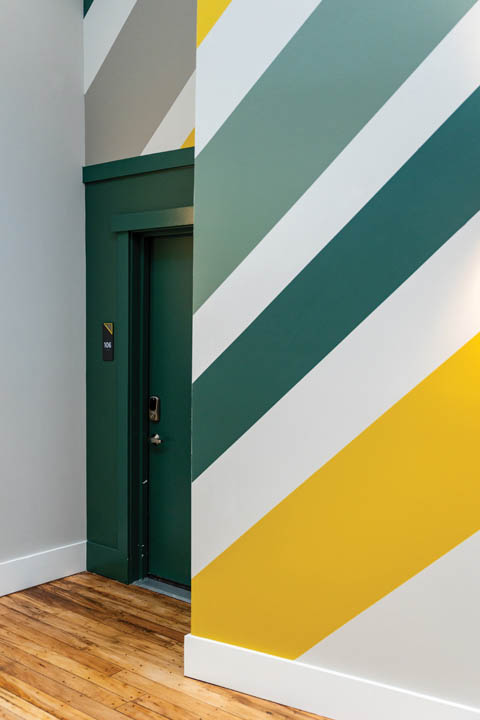
A unit sign can really set the tone, so it’s always the first thing Studio 618 focuses on in our signage projects. For this multifamily project, we drew inspiration from the industrial vibe of the refurbished textile mill. Acrylic panels and corrugated metal laminate were combined to create a cool, textured look that complements the building’s metal beams and architectural details, as well as the interiors designed by SouthPark Interiors. The pops of yellow, inspired by SouthPark Interiors’ color palette, frame the triangular metal panels and pull the whole color scheme together beautifully.
One person’s trash is another person’s treasure
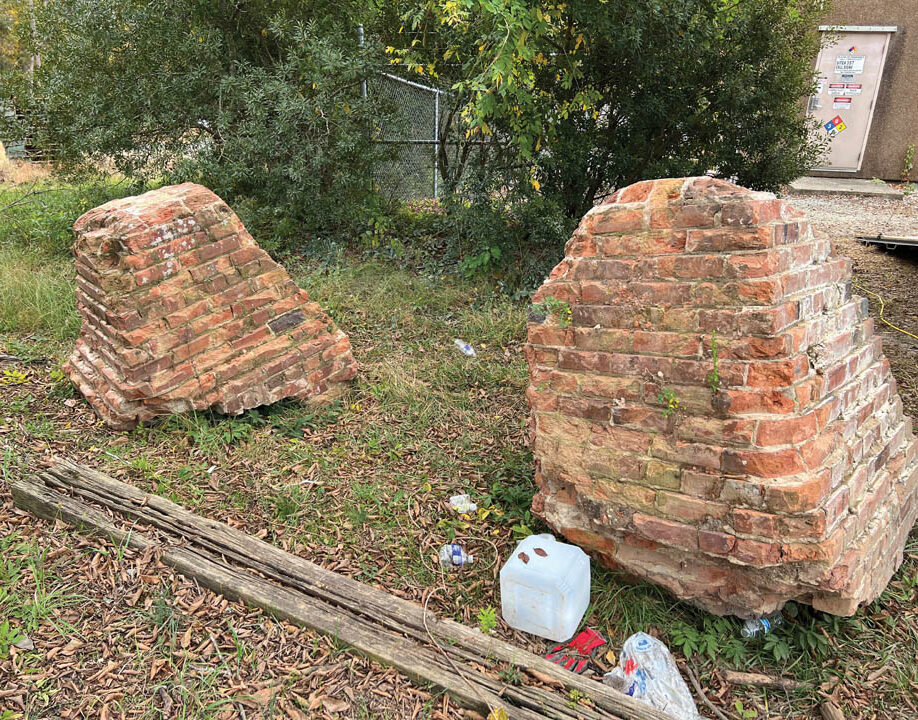
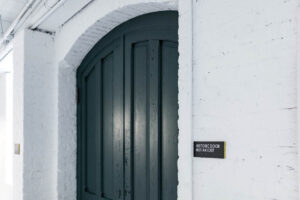
You don’t always get the chance to weave a property’s history into its signage, but this project was a rare exception. From the start, Studio 618 knew it was something special. The site is home to a historic textile mill that dates back to 1901 and operated until 1976. Today, it’s been reimagined into apartments and amenity spaces, but traces of its past remain throughout, including metal beams, original wood doors, historic wood flooring, and discarded brick structures that tell the story of its industrial roots.
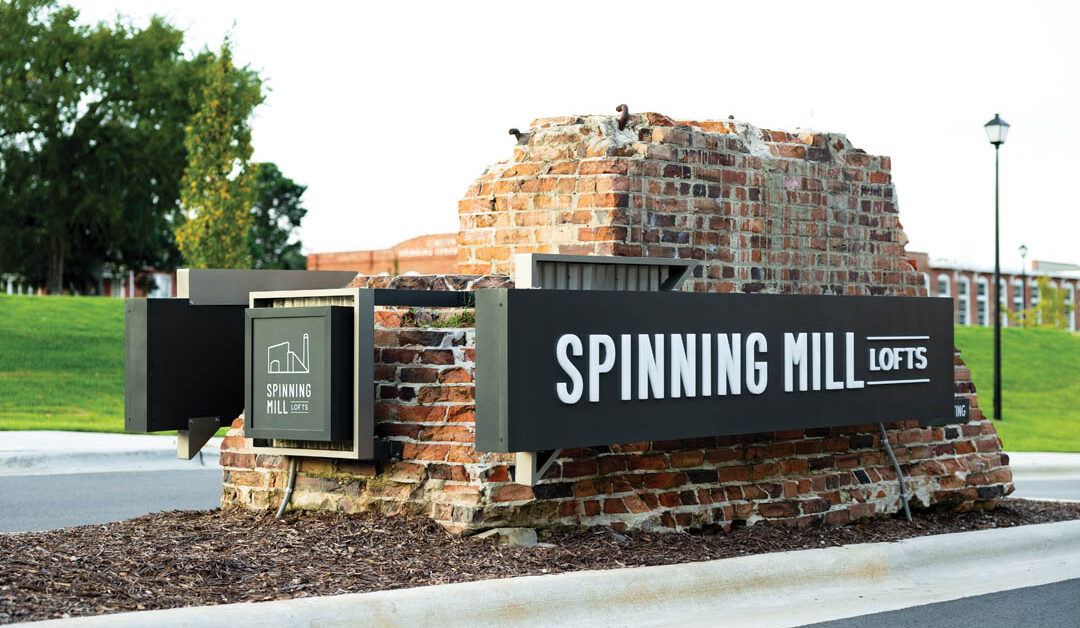
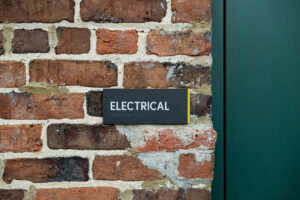
When Taft Development Group mentioned they wanted to repurpose some of those old brick structures for signage and wayfinding, Studio 618 was all in. It’s not every day you get to design signs that literally incorporate pieces of history.
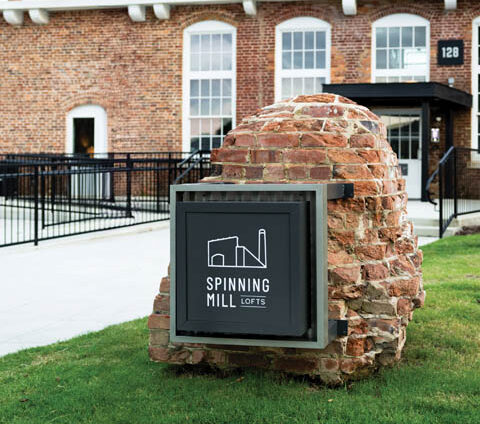
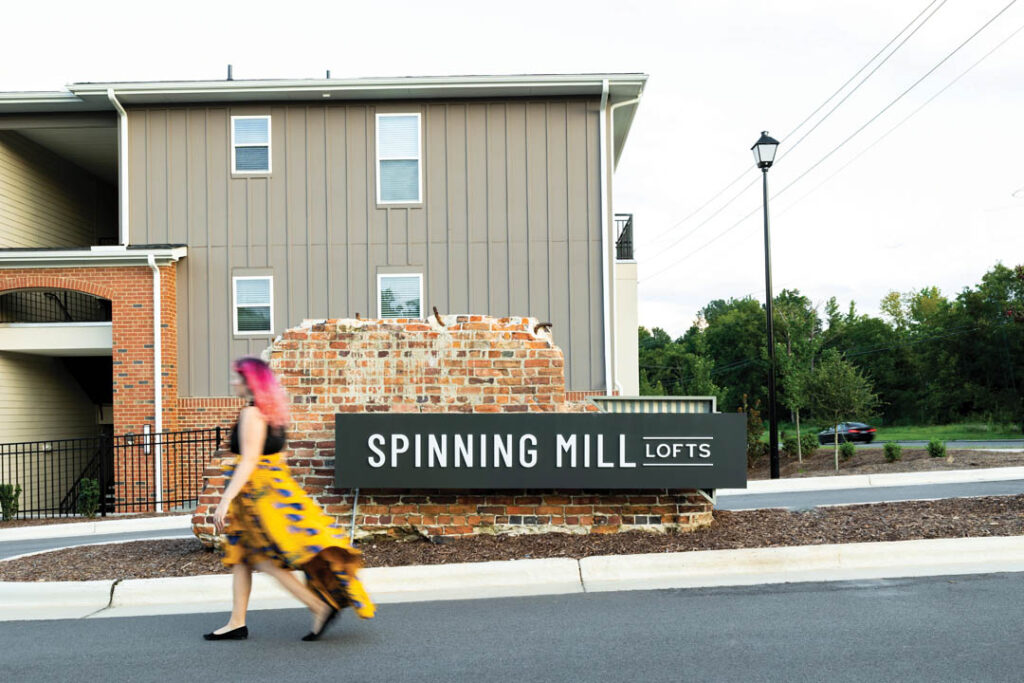
Studio 618 had a blast incorporating Yellow Duck Marketing’s logo, which strikes the perfect balance between modern design and a subtle nod to the past. It fits beautifully on the monument and secondary entry signs. To bring everything together, corrugated metal was added to the brick base to echo the building’s industrial character, a material that also shows up in some of the interior signage.
Sure, it might have been easier to build something brand-new from scratch, but where’s the fun in that? Using elements from the original site adds depth, tells a story, and makes this community truly stand out in a sea of lookalike developments.
An intentional approach
Every project Studio 618 takes on follows the same core principle: Intention. If I had to sum up what our company is all about in one word, that would be it. Everything we do has a purpose behind it. Whether it’s a three-level garage covered in creative murals, a custom feature wall for a high-end office, or a signage and wayfinding system for a multifamily community inspired by a refurbished textile mill like this one, every detail is intentional. Each design choice needs a reason, and “because I like it” is never enough.
Before starting Studio 618, the importance of design strategy and storytelling was instilled in me at my previous company, and it’s something I’ve carried forward ever since. It’s about focusing on the why before the how. When a project is built on intention, it gains meaning and purpose. It can even become part of the story that residents, tenants, and clients connect with. That’s exactly what happened here, giving the client a narrative to share about the inspiration behind the design and how it ties back to the building’s history.
No other multifamily community will have signage quite like this. Sure, someone could replicate the idea, but the mix of distinct branding from Yellow Duck Marketing, the beautiful interiors by SouthPark Interiors, and the unique history of this refurbished textile mill make this project one-of-a-kind. What makes it special is the story, the intention, and how everything comes together to create something
truly unique.
Why custom signage is a good investment

Whether you’re developing a new building or upgrading an existing one, investing in custom signage is always a smart choice. Thoughtful, intentional signage can help you achieve several key goals:
- Intentionality: Creating a beautiful multifamily community like Spinning Mill Lofts involves many moving parts, including architects, interior designers, and engineers, so signage can easily get overlooked early on. The projects that succeed most are the ones where signage is planned intentionally from the start. For example, thinking about unit sign placement while planning corridor lighting can prevent common issues. In past projects, I’ve seen lighting installed in ways that didn’t work with the signs, such as being too bright, too low, or on the wrong side of the door. Planning early avoids those kinds of problems.
- Stand out from the rest: A unique, well-designed signage package makes a property feel special. The client could have chosen stock signage, but it would not have reflected the industrial character of the building or tied into the materials and color palette. New properties with high-end finishes tell a story, and repeated generic signage cannot do that. Every Studio 618 project is different, from nautical-themed signs at a waterfront property to moody bronze and wood signage in a luxury condo to industrial-inspired signs like Spinning Mill Lofts. Each package complements the property it lives in.
- Make a lasting impression: With so many new multifamily buildings being constructed, custom signage can set your property apart. First impressions matter, and a well-designed signage system can make people feel welcome and encourage them to return. Having been a renter for over 15 years, I experienced countless cookie-cutter multifamily buildings that lacked character, which made me hesitant to commit. When a building does not invest in a warm, unique experience, it reflects poorly on them. Intentional, high-end signage helps your building stand out, creates a positive experience for residents, and ultimately elevates the property above the competition.
Final thoughts
When designing a project, it’s important to think about how your signage fits into the bigger picture. Take the time to dig into every detail, from interior design renderings and furniture choices to textile patterns and architectural elements. This thorough approach ensures the signage not only serves its function but also enhances the overall look and feel of the property. Great signage can tie a project together, tell a story, and help it stand out from the competition. Bringing an experiential designer on board early can make a huge difference, so don’t wait too long to get them involved.