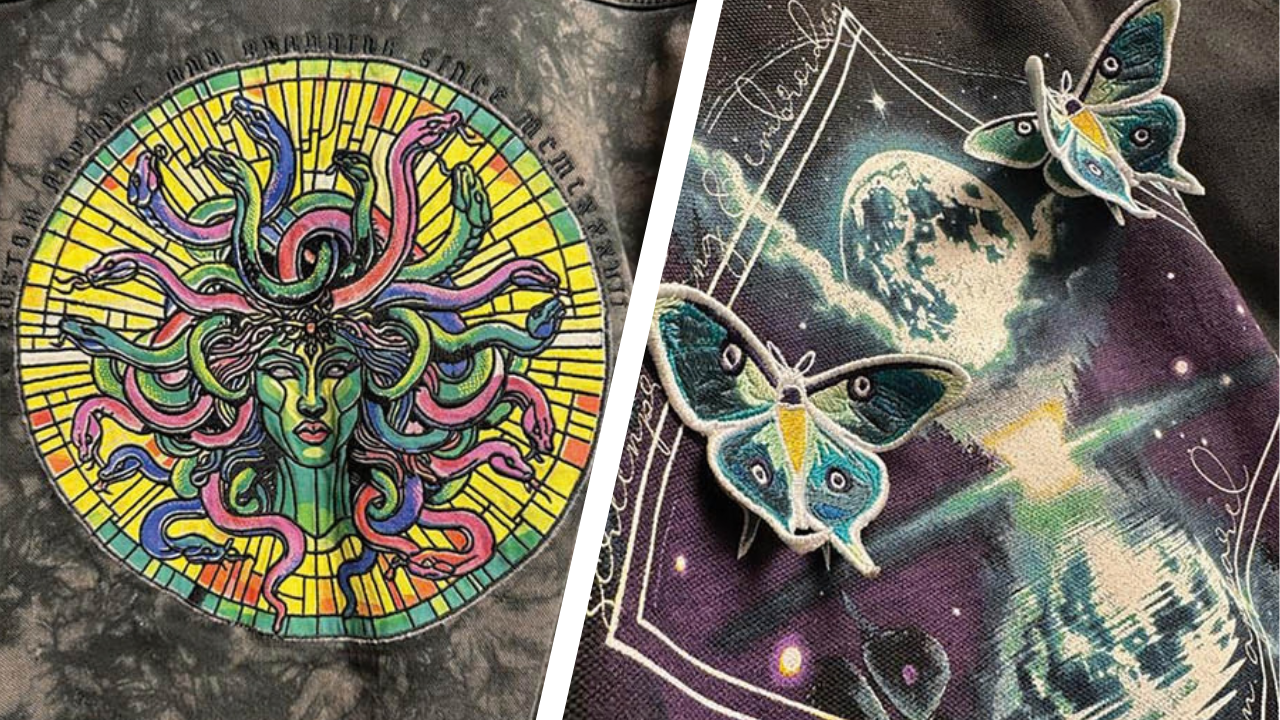
In an industry oversaturated with people looking for a quick buck with AI art sloppily thrown on a shirt, it can be difficult to stand out with something expertly unique. Mixed media decoration can be a distinctive way to flex your talent and skill.
Mixed media decorating involves combining two or more decoration applications into one cohesive artwork to create dimension, texture, detail, and, in some cases, intricacy to a piece. Utilizing mixed media can elevate a garment from a basic wearable to a standout statement. If you’ve never tried mixed media or are just looking to expand your game, we’ve got the guide to get you started.
First things first
No matter how complicated or simple the project, the key to success is working out the potential roadblocks at the art level instead of on the machine. Do research on what other people have done: watch videos, talk to people in the industry, and read articles. Someone somewhere has worked through some of the hard parts so you don’t have to figure it out the hard way.
Talk through the project with your team
No one is going to know every intricate detail of the process and what is needed, so communication is key. Building the art so it’s successful in screenprinting AND embroidery will require working with the whole team to consider the respective details. Talk through the project with everyone involved so you don’t create headaches in production.
Make a plan
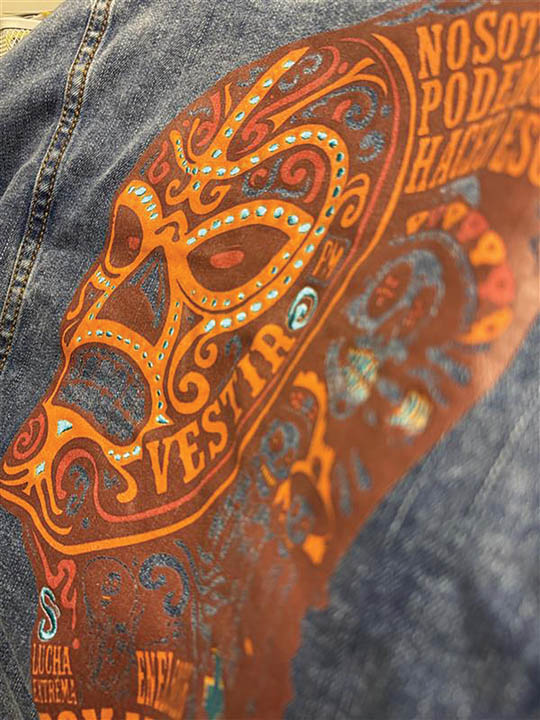
Most projects you can move forward into production without needing to work through every detail. With mixed media, you need a solid plan. You need to know which applications are happening in which order. You need to know the products they are going on, the colors, the size restraints, everything. You need to know how your applications are going to work together and how they’re going to line up.
You’ve got your idea, but you don’t know the best decoration methods for the job. Let’s break down the three main decoration methods to figure out what works best to implement your plan.
Screenprinting
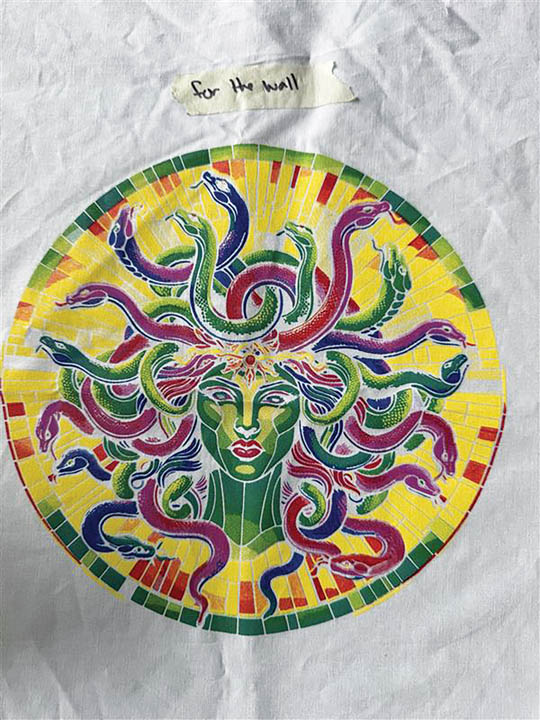
Utilizing screenprinting is an efficient way to get high detail, complex design, and a soft hand over a large area of the garment. When building up your screenprint file, consider the other decorations you’re applying.
If you’re doing embroidery, you need to take into consideration how the embroidery will line up on the design. Account for distortion on the print and don’t make the lineup so tight that it’s impossible to hit the mark. Embroidery can go on top of the print, so expanding the art to give your embroidery a little wiggle room will help.
Conversely, if you’re adding heat-applied glitter, puff, or a patch, the plastisol can deter adhesion, so you want to make sure you’re leaving space to add that decoration free of plastisol.
If the design calls for foil, you need to either mix an additive into your plastisol to block adhesion, or you need to design so the area you want foiled is separate from what remains just plastisol.
Embroidery
Garment
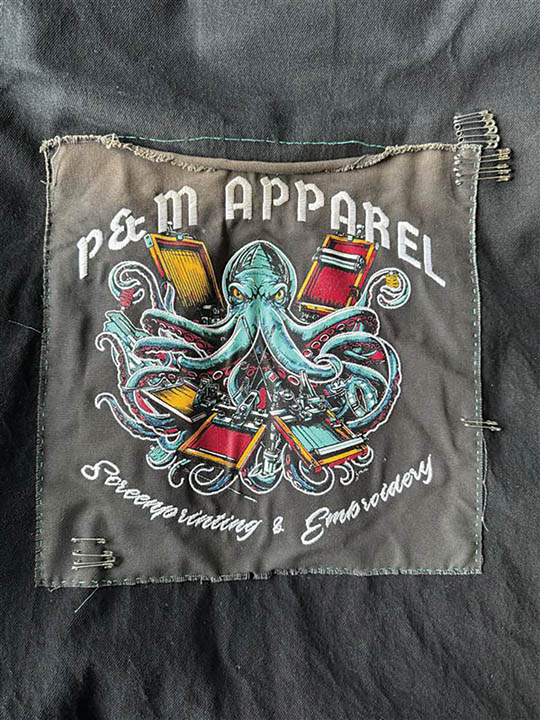
Not every product that can be printed can be embroidered, and vice versa. Consider the weight and stretch of the garment before adding embroidery on top of another decoration. But also, there are some pieces that have embroidery pockets built in, but can’t easily be loaded onto a screenprinting platen or printed with multiple colors. On some occasions, we’ve had to do a lot of hand-sewing to deliver the product the client wanted.
Primary decoration
Consider any decoration that comes before or after embroidery. Screenprints can distort ever so slightly, pulling off the press or under the flash. The print could still look great, but won’t line up with your embroidery file. Transfers don’t have as many issues with distortion, but embroidery will be punching holes into the material and could cause adhesion issues after washing. If adding decoration after embroidery, you can run into texture and adhesion problems if overlaying the embroidery. I try to reserve embroidery for the last decoration method for this reason.
End result
As we’ve started experimenting with 3D mixed media builds, we’ve had to work backwards with the end result and plan accordingly. What kind of materials do you need to incorporate to make it a success? What does washability look like? How will it look and how will the design land on the user? How will it sew out? Considering all the possible issues before you hoop your work will save a lot of issues during the process.
Heat-applied graphics
Materials
With digital transfers, you’re taking into consideration both the garment and the transfer material, as you’re pressing them both together. Some fabrics can’t handle the heat well, and some fabrics have too much texture or seams to be successful.
Mixing with embroidery
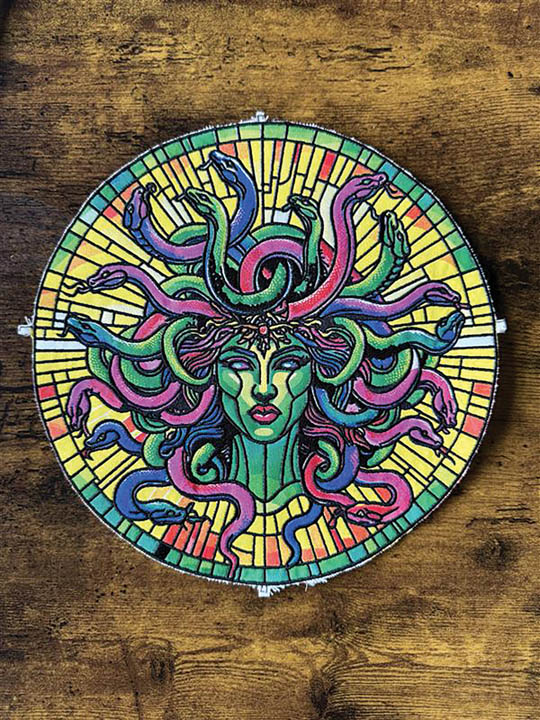
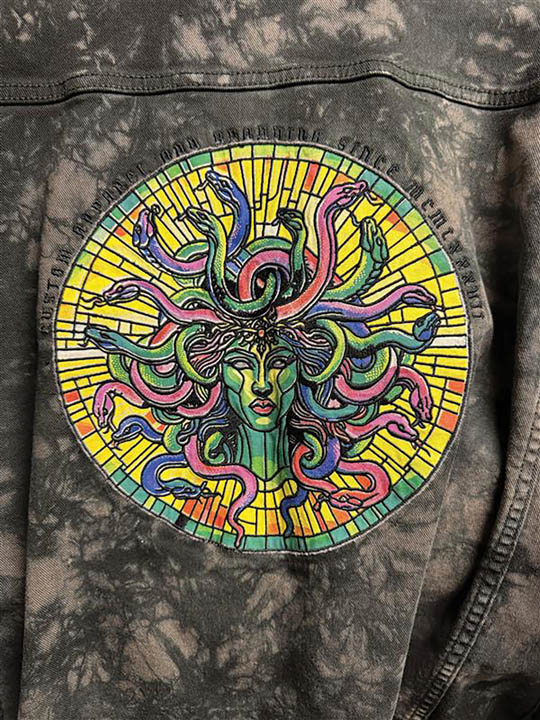
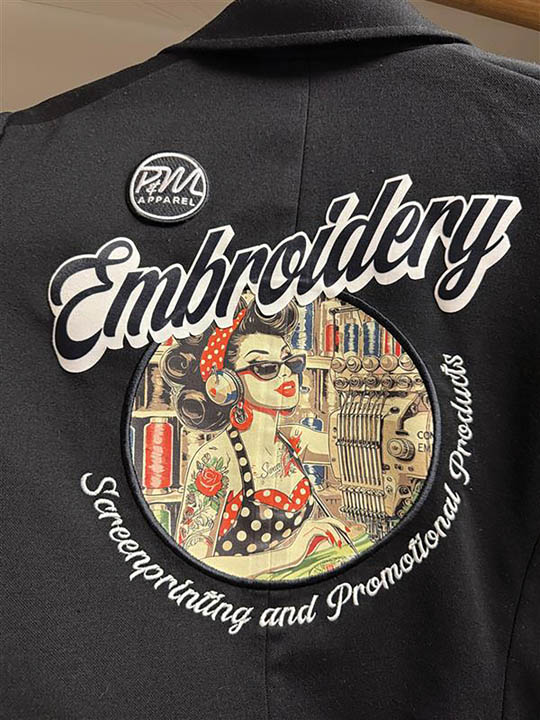
When combining with other decoration methods, digital transfers can be really helpful in getting more detail and color into something needing embroidery. We’ve utilized transfers to make mixed media patches when the client wanted more detail than a needle can achieve. Remember, embroidery is punching holes into your garment and transfer material, which can compromise the adhesion if not done correctly.
Mixing with screenprinting
Our favorite way to incorporate transfers into screenprinting is making it an even more custom experience for the client. We take a screenprint that is mass produced and leave space to add things like a name, graduation year, or major incorporated right into the design, making it completely unique to the end user. We’ll also use glitterflake HTV to make parts of a design pop with glitter. Leave space for distortion when using glitterflake, just as you would for embroidery. Faux leather patches are another great way to add dimension to your screenprint.
Troubleshooting
How would you even price something like this?
Mixed media is not for skimping on pricing. This takes more planning and execution than any of its parts individually. At a minimum, you’re charging exactly what you would for each of the pieces individually, and then considering any additional prep time and building it into the cost. You have to consider this more like a range of custom, unique wearable art when setting up cost. The right client is not looking for cheap; they’re looking for something amazing.
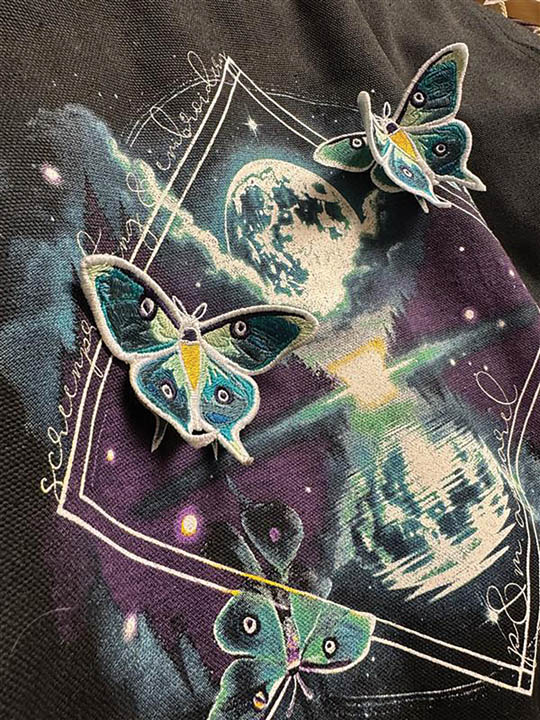
Order of operations
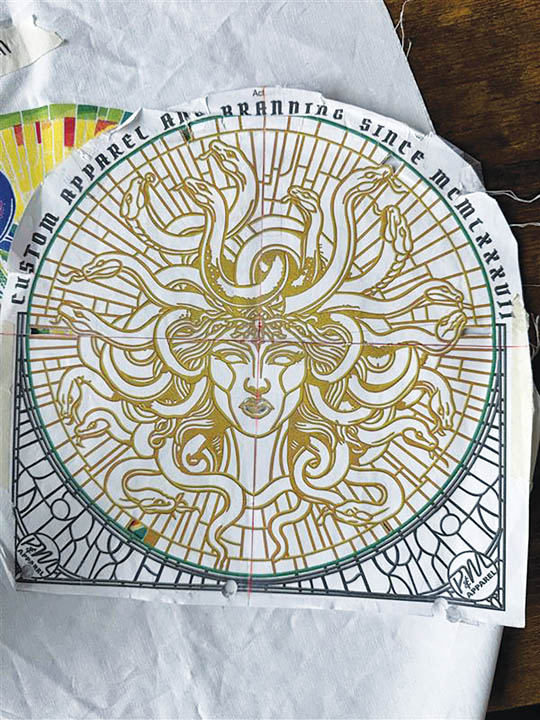
Considering the order you apply the decorations is critical. Embroidery, patches, anything with dimension needs to be last, and everything underneath it needs allowance to cover any shifting of the garment in the process. Build in registration marks not only for printing, but for embroidery as well, so registration is easier.
How do I get my team on board?
Beer helps. This is probably the trickiest part, because your production team is going to be the one dealing with every production headache while enacting your vision. Pulling them into the conversation before the art starts getting developed will fix a lot of headaches. Being on press or at the machines to help with tweaking will help too. Finding people who care about being inventive and stretching the limits helps too.
With the right planning and creativity, mixed media decoration can be a great tool in your arsenal. The more customers look for something new and different, the more valuable a shop can become by just getting experimental and trying to think outside the box (or T-shirt). Start with making stuff for your own branding and use it to show off just what you can do with their brand.